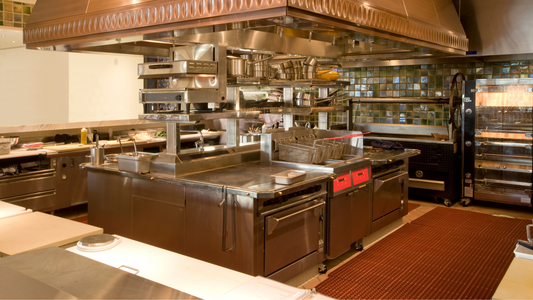
Stand in a secondary school kitchen at twenty to twelve and you'll watch something no restaurant is ever asked to do. Six hundred meals, plated and gone, inside the fifty minutes between one bell and the next. Then again tomorrow, for thirty-nine weeks, at a price per head fixed months ago that won't shift because your fryer struggles.
I'm Andrew Pickersgill, Managing Director at eCatering. Thirty-odd years supplying UK kitchens, and I'll say it plainly: buying school kitchen equipment UK-wide is a different discipline to kitting out a restaurant. Restaurants are sized against covers. Schools are sized against a clock.
Most guides to education catering equipment are a generic list with "school" dropped in. Not much use when the constraint isn't what you cook, but how fast it leaves the door. This one is a satellite of our framework on what commercial catering equipment you need by venue type — start there if you're still comparing venues.
A school kitchen doesn't have a peak — it has a wall
A pub has a peak. A hotel has two. A school has neither, because a peak implies a curve, and a curve implies some give.
There's no give in a lunch service. The sitting is fixed by the timetable, not by demand. If your kit can't turn 600 covers in 45 to 60 minutes, you don't get a slower service — you get a queue eating into lesson time and a head teacher on the phone by Thursday. Everything you buy is judged on one question: can it deliver full output inside the window, rather than across the day?
It changes the money, too. A restaurant can price its way out of a bottleneck. A school works to a fixed price per head, set at trust or local authority level. You can't spend your way out. You spec your way out.
Batch capacity beats oven decks
Here's where most school canteen equipment specifications go wrong. Lunch runs late, so the obvious answer looks like more oven. Another deck. But decks solve a volume problem, and a school kitchen has a timing problem — a deck fills, cooks, empties, then you reload, and that reload cycle sits in the middle of your fifty minutes.
What clears a wall is batch capacity plus regeneration.
- Bratt pans. One pan does a very large batch of a wet dish — mince, curry, chilli, pasta sauce — in a single load, with no reload during service.
- Combi ovens with regeneration racks. Cook ahead, hold or chill, then regenerate a full rack in one pass before the bell. Cooking stops competing with service.
- Convection ovens as the flexible layer. Still needed, but for sides, tray bakes and jackets — not as the primary engine.
The rule I'd give any catering manager: buy the thing that empties in one movement, not the thing that empties in six.
A Contender 42L Convection Oven with rotisserie function works as a primary unit for a small primary kitchen or a satellite serving point. The range of commercial ovens covers convection through to combi, and the Contender mid-range collection is where most school kitchens land.
Redundancy matters too. Hotels buy two mid-size units rather than one large one because a hotel kitchen can't close, and neither can a school — the argument we make in our hotel kitchen equipment checklist.
The servery: hot holding and topping units
You can cook 600 meals perfectly and still lose the service, because the bottleneck in most canteens isn't the kitchen. It's the counter.
What actually moves a queue? Not how hot the food is. How many decisions each pupil makes, and how many hands touch each plate.
Hot holding and servery counters must hold safe temperature for the full window without drying the food to leather in the last ten minutes.
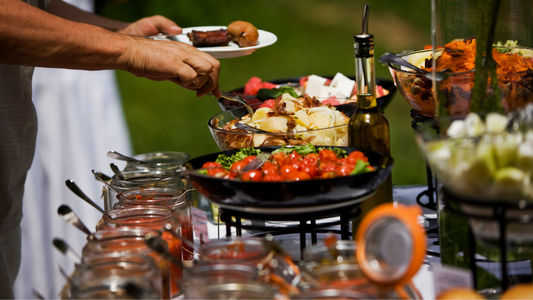
Refrigerated topping units quietly transform a service. A Contender 1800mm Wide Refrigerated Topping Unit gives you a chilled deck of pots — salad, sandwich fillings, jacket potato fillings — served straight from the counter. Self-service where the age group allows, assisted where it doesn't. Either way, a step comes out.
Multiple serving points are the other lever, and the reason big academy kitchens cost what they cost. Two don't double your kitchen. They halve your queue.
Behind the counter, cold storage runs to a weekly rhythm rather than a daily one, because deliveries land on set days in bulk. The FSA expects 0–5°C storage with monitored thermometers, so browse the commercial fridge range with the delivery schedule in front of you, not the menu. The wider servery range sits on our education catering equipment page.
Warewashing that can keep up with the trays
Worth sitting with: if 600 meals go out over fifty minutes, when do 600 trays come back?
Roughly all at once. Two or three surges, in trolleys, at the end of each sitting. This is the number people get wrong — they size the dishwasher against meals spread across the day, when what matters is the return rate, all of it to be turned before the next sitting.
A pass-through hood dishwasher is the answer for almost any school doing more than a couple of hundred meals. Racks enter one side and exit the other, so loading and unloading happen at the same time rather than in sequence. The Contender Pass-Through Hood Dishwasher (DMH017) is £1,691.47 ex VAT, and it's three-phase — check that against the incoming supply before you order, not after it's on a pallet in the car park.
Then the unglamorous half: clearing trolleys and racking. A Quattro 3-Tier Stainless Steel Clearing Trolley does more for turnaround than another £500 of machine, because it moves trays in bulk rather than in armfuls. Compare machines across the dishwasher and glasswasher range; trolleys, racking and prep benching live in the Quattro budget collection.
School Food Standards and what they mean for your kit
The Requirements for School Food Regulations 2014 — universally called the School Food Standards — are mandatory for maintained schools, academies and free schools in England. They dictate menu composition, and menu composition dictates your equipment mix. It's that direct a chain.
Two practical consequences.
More vegetable and salad preparation. The standards push veg, salad and fruit across the week: more prep bench, more washing capacity, more chilled storage, and realistically a food processor at volume. Prep space is what schools under-build most often.
Less deep-fat frying. Fried food is restricted to no more than twice a week, so sizing a kitchen around frying capacity spends money on something the regulations won't let you use. A Contender Eco 550mm Electric Griddle is the better use of that line — variety without the frying, earning its space five days a week rather than two.
Building Bulletin 103 (BB103) is worth knowing about too — the Department for Education's non-mandatory area guidance for school premises. If you're refurbishing, it's a useful check on whether the room can hold the kit you've been quoted.
And one thing nobody puts on the equipment list: free school meal volumes move year on year, and your batch sizing moves with them.
Allergens and pupil records
School catering carries an evidential burden closer to healthcare than hospitality. A restaurant handles a stranger declaring an allergy at the table. A school holds a named record for every pupil with a recorded allergy, matched against the meal served, every day, by staff who may be covering a shift. So the allergen answer has to be built into the room, not into somebody's memory.
- A segregated prep area — separate bench, colour-coded boards and equipment, its own hand-wash provision, and separate storage for allergen-free ingredients. Retrofitting costs roughly three times what building it in does.
- A documented allergen policy tied to the pupil record system, with clear handover for supply staff.
- A cleaning programme from day one — dosing, routine, records. Cross-contamination is a cleaning failure as often as a storage failure, and the routine needs writing down before term starts, not after the first incident.
If your team also covers a care setting — trust catering teams increasingly do — the parallels are in our care home kitchen equipment guide.
The three tiers: what a school kitchen actually costs
Every figure below is equipment only, excluding VAT — excluding installation, extraction and ducting, services, electrics, commissioning and fit-out. I repeat that at every tier deliberately, because it's the most common misreading of any price list, ours included.
- Entry — primary, around 250 meals a day: £15,000–£25,000 (equipment only, ex VAT). A convection oven or two, a solid bank of refrigeration and freezing, one servery counter with hot holding, a dishwasher sized to the layout, prep benching, sinks and clearing trolleys.
- Mid — secondary, 500–800 meals a day: £30,000–£55,000 (equipment only, ex VAT). Batch cooking becomes the centre of the spec: bratt pans or combi ovens with regeneration racks, high-capacity refrigeration, multiple hot holding and topping units, a three-phase pass-through hood dishwasher, a griddle and fryer, and a segregated allergen prep zone.
- Premium — multi-serving-point academy or trust central kitchen: £70,000–£120,000+ (equipment only, ex VAT). Multiple combi ovens with regeneration, blast chilling if you're running cook-chill to satellite sites, walk-in refrigeration, several servery lines, warewashing with capacity to spare.
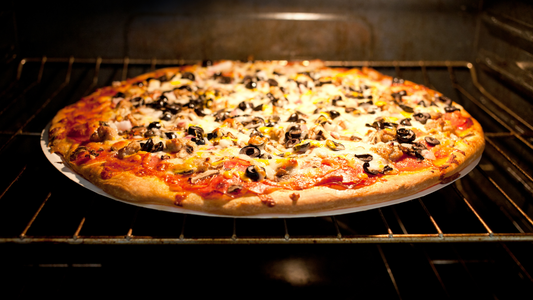
One premium option worth knowing about if pizza is a fixed point on your menu rotation. A conveyor oven suits a school better than it suits most restaurants, for the same reason a school is different in the first place: the bake is spec'd rather than artisan, the volume is predictable, and the person loading it at 11.40am might be covering a shift. Our KINN range — the premium tier of our own-brand line — runs conveyor pizza ovens from £4,537.49 to £8,333.31 ex VAT in 16", 20" and 26" belt widths, electric or natural gas, with a 2-year parts and labour warranty extendable to five. Set the belt speed once and it produces the same pizza at 11.40 as it does at 12.30, whoever's on it.
Now the part specific to education. Elsewhere an operator can flex pricing to recover a poor spec. You can't — the price per head is fixed — so the return shows up as labour hours saved, not extra revenue. The pass-through dishwasher isn't a luxury; it's two staff hours a day you aren't paying for.
Equipment tends to be 40–50% of a total kitchen project. Quoted £40,000 of kit? Plan for roughly double.
Bundles built for education
We package kit by venue because catering managers kept asking us to. Two are built for school kitchens, and prices are as listed on site.
- The School Kitchen Bundle — £1,799.99. A Contender 42L convection oven with rotisserie, a Contender Eco 550mm electric griddle, a Contender pass-through hood dishwasher and a Quattro 3-tier clearing trolley. A cooking layer, a warewashing layer, and the kit that connects them.
- The School Dinner Bundle — £1,379.99. A Contender 520mm single tank fryer, a Contender 320L triple door bottle cooler, a Contender 1800mm wide refrigerated topping unit and a Contender twin deck pizza oven. Aimed squarely at the counter.
Neither equips a 600-meal secondary kitchen alone, and I wouldn't pretend otherwise. What they give you is a matched core to build outward from, because Contender and Quattro units share footprints, voltages and shelf heights. See the full bundles collection.
Seven mistakes we see in school kitchens
- Adding oven decks when the problem is batch capacity. More decks means more reload cycles inside a fixed window.
- Sizing the dishwasher to the meal count, not the return rate. Meals go out over fifty minutes. Trays come back over twenty.
- Ordering three-phase kit into a single-phase kitchen. Check the incoming supply before the order goes in.
- Treating the servery as furniture. Counter layout and serving points decide queue length more than cooking capacity does.
- Building the allergen prep zone as a retrofit. Three times the cost later, and meanwhile you're managing a documented risk with a chopping board and hope.
- Specifying against yesterday's menu. A big frying line and a small prep bench gets the standards backwards.
- No monitored cold storage or hygiene routine from day one. Thermometers, logs, dosing, records. The cheapest compliance you'll ever buy.
Notice how few are about picking the wrong brand? Almost none of the expensive mistakes in a school kitchen are product mistakes. They're timing mistakes.
When to bring in a Key Account Manager
There's a point where a website stops being the right tool, and school kitchens reach it early. Rooms built for a roll half the current size. A three-phase board with nothing spare. A trust wanting eight sites to one standard.
The mistake isn't buying the wrong oven — it's buying any oven before anyone's looked at the room. We'd rather spend twenty minutes in your kitchen during a half-term than take a call in August about a three-phase dishwasher that needs six weeks and a switchboard upgrade nobody budgeted.
Our Key Account Managers cover the UK face to face, and academy trust rollouts are where that matters most. We've done a good deal of work around Birmingham and the wider West Midlands, and the pattern holds: trusts that standardise across sites get better pricing and one engineer route. Those that let each school buy independently end up with eleven different dishwashers. You'll find the team on our meet the team page.
If the constraint is cashflow rather than spec, our finance and leasing options are worth reviewing first.
Frequently asked questions
What equipment does a school kitchen need?
A school kitchen needs a bank of convection or combi ovens or bratt pans, high-capacity refrigeration and freezing, hot holding and refrigerated topping units on the servery, a pass-through hood dishwasher, clearing trolleys and racking, a griddle or fryer, and an allergen-segregated prep area.
How much does it cost to equip a school canteen?
Expect £15,000–£25,000 for an entry-level primary kitchen at around 250 meals a day, £30,000–£55,000 for a secondary kitchen at 500–800 meals, and £70,000–£120,000+ for a multi-serving-point academy or trust central kitchen. All figures are equipment only, excluding VAT.
Those bands exclude installation, extraction, services and fit-out. Equipment is typically 40–50% of a total project, so roughly double for an all-in number.
What are the School Food Standards and how do they affect equipment?
The School Food Standards are the Requirements for School Food Regulations 2014, mandatory for maintained schools, academies and free schools in England. They set menu composition — which in equipment terms means more vegetable and salad prep capacity, and fried food restricted to no more than twice a week.
That shifts spend towards prep benching, washing and chilled storage. Building Bulletin 103 (BB103) offers separate, non-mandatory guidance on kitchen and dining area sizing.
How do you serve 600 school meals in under an hour?
By cooking ahead in large batches and regenerating just before service, rather than cooking to order. Bratt pans and combi ovens with regeneration racks empty in one movement; deck ovens need reload cycles that eat into a fixed 45–60 minute window. Then attack the queue itself — multiple serving points and refrigerated topping units for self-service.
What dishwasher does a school kitchen need?
Most schools serving more than a couple of hundred meals need a pass-through hood dishwasher — racks enter one side and exit the other, so loading and unloading run at the same time. The Contender Pass-Through Hood Dishwasher (DMH017) is £1,691.47 ex VAT and runs on three-phase.
Size it against the tray return surge, not the daily meal count. Commercial machines run two-to-three minute cycles with a high-temperature sanitising rinse; domestic machines take ninety minutes and don't sanitise.
Can academy trusts finance kitchen equipment across multiple sites?
Yes. Finance and leasing options are available to UK organisations including limited companies, charities and trusts, subject to status, trading history and credit checks. Multi-site rollouts are usually easier to fund as a single specified programme than as school-by-school purchases.
Where to go next
If you're specifying rather than reading:
- Everything you need to run a successful school or college kitchen — the full education range
- Complete kitchen bundles — matched kit, one delivery, one warranty conversation
- What commercial catering equipment do I need? — the venue-by-venue framework this guide sits inside
- Care home kitchen equipment guide — if your trust also covers care settings
- Opening a hotel kitchen: the equipment checklist — redundancy and regeneration at scale
Get the batch capacity right, size warewashing against the tray surge rather than the meal count, and build the allergen zone in on day one. The rest is detail you can solve with a tape measure.
Good luck with the refurbishment. Send us the room dimensions and a photo of the fuse board before you send us the order.
— Andrew
Prices shown excluding VAT as of 9 August 2026 and are subject to change. Bundle prices are as listed on site. Cost bands cover equipment only and exclude installation, extraction, services, commissioning and fit-out. Always check product specifications to ensure equipment meets your kitchen's requirements.
This article is for informational purposes. Business and finance decisions should account for your specific circumstances, local regulations, and professional advice where appropriate.
The School Food Standards and Building Bulletin 103 guidance are subject to change, and requirements differ across England, Scotland, Wales and Northern Ireland. Always verify current requirements with the relevant authority before finalising a specification.