Your commercial oven is the single most important piece of kit in the kitchen. Get it right and everything flows - covers go out on time, food quality stays consistent, your team doesn't spend half the service waiting for trays. Get it wrong and you've got a very expensive problem bolted to the wall.
After 30+ years supplying UK commercial kitchens (Andrew Pickersgill, Managing Director here), we've seen the same mistakes come through our doors week after week. A pub landlord in Bristol who bought a three-phase combi for a single-phase premises. A café owner in Manchester who sized her oven for a quiet Wednesday instead of a packed Saturday. This guide is built from those conversations - real numbers, real prices, and the stuff other buying guides skip.
What a Commercial Oven Actually Is - and Why Domestic Won't Cut It
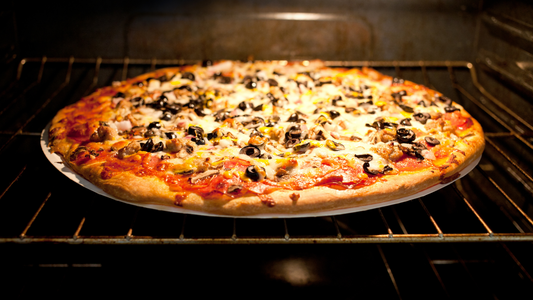
This comes up more often than you'd think, especially from first-time operators and street food vendors stepping into bricks-and-mortar. A domestic oven tops out at about 250°C. A commercial oven pushes 300-500°C depending on type. That's not a marginal difference. That's the difference between proper pizza and warm dough.
Commercial ovens are built from stainless steel. They're designed for 10-16 hours of daily use. They accept standardised GN (Gastronorm) pans - the tray system that every other piece of commercial kitchen equipment is built around. Open the door on a domestic oven and you'll wait minutes for it to recover temperature. A commercial oven recovers in seconds.
Here's the volume gap in plain terms: a 10-tray combi oven produces 200+ meals per service. A domestic oven handles maybe 15. You can't serve a busy Friday night on a domestic oven any more than you can run a taxi service with a bicycle.
Then there's the regulatory side. Environmental Health Officers expect commercial-grade equipment in a commercial kitchen. Your insurance may not cover a claim if you're running domestic kit in a commercial setting. Not worth the risk.
Key Factors to Consider Before You Buy
Covers and Throughput
Start here. Everything else follows from how many covers you're pushing at peak service.
-
Up to 50 covers - A countertop convection oven holding 3-4 GN trays handles this comfortably. Think small cafés, sandwich shops, food trucks.
-
50-100 covers - Full-size convection oven or a 6-tray combi. You'll need 4-6 full-size (1/1 GN) trays to keep up during service.
-
100-200 covers - A 10-tray combi oven is the standard choice. Ten full-size trays running simultaneously gives you the throughput for a busy restaurant or pub kitchen.
-
200+ covers - Large combi (10 x 2/1 GN, the double-width trays) or multiple ovens running in parallel. Hotels, contract caterers, large-volume operations.
What does "1/1 GN" actually mean? A GN 1/1 tray measures 530 x 325 mm - roughly the size of a standard baking sheet. When an oven is described as "6 x 1/1 GN," it holds six of those trays at once. The bigger the number, the more you cook per batch. If your kitchen already uses Gastronorm trays (and it should), every tray slots straight in.
Space and Installation
Measure the space including door swing. A 10-tray combi with the door open extends 600-700 mm forward - that's a lot of gangway to lose during service. Most ovens need at least 150 mm of rear clearance for ventilation.
Combi ovens need a water supply and a drain connection. That's a plumbing cost on top of the oven itself.
Weight matters too. A 10-tray combi weighs 120-180 kg. If you're on a first floor or in an older building, check your floor loading capacity before you order. Seriously.
Power Supply - Single Phase vs Three Phase vs Gas
This is where we see the most expensive mistakes. A commercial oven sitting in its box because the electrics aren't right is a painful sight.
-
Single phase (230V, up to 32A) - Suits ovens up to about 7 kW. Smaller convection ovens, compact combis, and countertop models. Most UK commercial premises have single-phase supply as standard.
-
Three phase (415V) - Required for larger combi ovens (10+ kW), range ovens, and high-output pizza ovens. If your premises doesn't have three-phase, you'll need to apply to your Distribution Network Operator. Budget £1,000-£3,000 and allow several weeks.
-
Gas (natural or LPG) - Cheaper to run at roughly 6.3p/kWh compared to about 26p/kWh for electricity. But gas ovens require a Gas Safe registered engineer for installation, plus a canopy hood with gas interlock system. No extraction, no gas. That's not a guideline - it's the law.
Check your power supply before you buy. Not after. eCatering stocks single-phase and three-phase options across our oven range, and our team can help you match the oven to your supply.
Running Costs and Energy Efficiency
Running costs add up faster than most operators expect. At current UK energy rates (Q1 2026 Ofgem price cap):
-
Electric convection oven (5-7 kW): approximately £1.30-£1.85 per hour at full load
-
Electric combi oven (10-20 kW): approximately £2.60-£5.30 per hour at full load
-
Gas equivalents: roughly 75% cheaper per kWh, though installation costs are higher
Combi ovens do offset some of that running cost through efficiency. They cook around 20% faster than convection alone and reduce meat shrinkage by up to 20% - meaning better yield from the same raw ingredients.
On premium models, look for programmable timers, auto-standby modes, and insulated doors. Rational claims its iCombi Pro uses up to 18% less energy than standard combi ovens. Over a 10-15 year lifespan (which a well-maintained commercial oven should deliver), that adds up.
Warranty, Service and Aftercare
-
Budget machines: Typically 1-year parts warranty. If something goes wrong in year two, you're paying.
-
Mid-range: 1-2 years, usually backed by a UK service network.
-
Premium (Rational, Unox): 2-3 years, next-day engineer visits, remote diagnostics. Some will troubleshoot your oven from their end before sending an engineer.
Ask the questions upfront: where's the nearest engineer? How quickly do they respond? Are parts held in the UK? An oven that's down for two weeks waiting for a part from overseas costs you far more in lost revenue than the price difference on a better warranty.
Types of Commercial Oven Explained
Combi Ovens
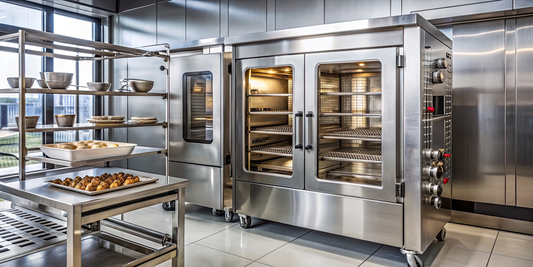
The most versatile piece of cooking equipment you can put in a kitchen. Three modes: convection (dry heat), steam, and combination (both at once). That combination mode is what sets it apart - roast, steam, bake, braise, poach, and regenerate from one unit. A good combi replaces a separate steamer, convection oven, and holding cabinet.
The catch? They need a water supply and drain. In hard water areas (most of England south of Birmingham), you'll need a water softener or you'll be replacing the steam generator within 12-18 months. Factor that in.
-
Price: £350-£2,500 for budget and mid-range; £5,000-£17,000+ for premium
-
Best for: Kitchens doing 80+ covers with varied menus
If you're weighing up whether a combi is right for you, our combi oven vs convection oven guide breaks down the decision in detail. You can also browse our full combi oven range.
Convection Ovens
Fan-circulated hot air for even cooking. The workhorse of café, bakery, and pub kitchens. Simpler to operate, cheaper to buy, and lower maintenance than a combi. If your menu doesn't need steam modes, a convection oven does the job without the extra cost or plumbing.
-
Price: £200-£700 (budget), £700-£2,000 (mid-range), £2,000+ (premium)
-
Best for: Cafés, bakeries, pubs, and any operation with a focused baking or roasting menu
The Quattro Titanium convection oven - our budget own-brand range - is a strong entry-level option at 108 litres with a cook-and-hold function, single-phase, from £565 on eCatering. Worth a look if you're starting out or running a lower-volume café without needing digital controls.
Deck / Pizza Ovens
Stone or steel decks deliver conduction heat directly to the base. That's what gives pizza its proper char and bread its crust. Nothing else replicates it. Available in single, twin, and triple deck configurations - twin decks are the most popular for pizzerias doing steady volume.
-
Price: £300-£1,000 (compact), £1,000-£3,000 (standard twin deck), £3,000-£8,000+ (multi-deck bakery)
-
Best for: Pizzerias, bakeries, any operation where base crispness is non-negotiable
Contender twin deck pizza ovens - our mid-range own-brand range - start from £952 on eCatering. Single-phase models handle 8 x 13" pizzas, which suits most independent pizza shops comfortably.
Microwave Combi
Combines microwave speed with convection or steam. Cooks 60-80% faster than conventional methods. Smaller capacity though, so it works best as a supplement alongside your main oven rather than a replacement. Ideal for regeneration-heavy operations, quick-service restaurants, and sandwich shops.
-
Price: £400-£3,000
Range Ovens
The traditional restaurant centrepiece - oven below, hob or griddle on top. Gas or electric, sometimes dual fuel. Large footprint, always needs extraction. If your cooking style relies on simultaneous hob and oven work, a range is hard to beat.
-
Price: £1,500-£10,000+
-
Extraction canopy is mandatory regardless of fuel type
Budget, Mid-Range and Premium - What You Actually Get at Each Tier
Worth flagging up front: eCatering has three exclusive own-brand ranges - Quattro (budget), Contender (mid-range), and KINN (our premium eco-friendly cleaning and hygiene range). Where they fit each tier, we've called them out below.
Budget (Convection £200-£700 | Combi £350-£1,000 | Pizza £300-£1,000)
Quattro is our own entry-level range here, sitting alongside third-party budget brands like Gastrotek and Italinox. Stainless steel construction, basic or manual controls, single-phase plug-and-play on smaller models, 1-year warranty. You won't get programmable recipes or energy recovery, but for a startup, food truck, or café doing under 80 covers, these ovens do the job. eCatering stocks the Gastrotek compact combi from £387 and the Quattro Titanium convection from £565.
Mid-range (Convection £700-£2,000 | Combi £1,000-£4,000 | Pizza £1,000-£3,000)
Contender is our own mid-range brand - solid build quality, digital controls, 1-2 year warranty - sitting alongside Bartscher and Lincat. This is the tier for established restaurants and pubs doing 80-200 covers. The build quality jump from budget is noticeable: better door seals, more consistent temperatures, quieter fans, and proper steam injection on the combi models. The Contender twin deck pizza oven range starts from £952.
Premium (Convection £2,000+ | Combi £5,000-£17,000+ | Pizza £3,000+)
Rational, Unox, Moretti Forni. Up to 18% less energy consumption, programmable recipe libraries with hundreds of presets, remote diagnostics, precision humidity control, 2-3 year warranty with next-day engineer visits. Rational claims approximately £16,000 per year in total savings for a 200-cover-per-day operation, factoring in energy, food yield, and labour. That's the premium argument - the oven costs more upfront but pays for itself over time. eCatering stocks the Rational iCombi Classic from £8,296 (10-1/1 GN gas model). For maintenance and hygiene around a premium oven investment, our KINN eco-friendly cleaning range is designed specifically for commercial kitchens that take sustainability seriously.
Common Mistakes Caterers Make When Buying an Oven
We see these constantly. Seven of them, because the real world doesn't fit neatly into three.
-
Buying on price alone.** The cheapest oven costs the most over five years. Higher energy bills, more frequent repairs, earlier replacement. A £300 oven that lasts two years costs more than a £700 oven that lasts seven.
-
Sizing for average trade, not peak service.** Your oven needs to handle Friday night at 8pm, not a quiet Tuesday lunch. If it can't keep up during your busiest service, you've bought the wrong oven. Staff end up microwaving, cutting corners, or sending food out late.
-
Not checking the power supply.** Three-phase oven plus single-phase premises equals an oven sitting in its box for weeks while you wait for an upgrade. Could you really afford that downtime?
-
Ignoring extraction requirements.** Gas ovens cannot legally operate without a canopy hood and gas interlock system. If you don't have extraction, you either fit it (£1,500-£5,000+) or go electric. There's no workaround.
-
Choosing combi when convection would do.** Combi ovens are brilliant. They're also 3-5x the cost of a convection oven. If your menu is mainly baked goods and roasts without steam modes, a convection oven handles it. Save the combi budget for when you actually need it.
-
Skipping the water softener for combi ovens.** In hard water areas, limescale destroys heating elements and steam generators within 12-18 months. Some manufacturers will void your warranty if you don't fit a softener. Not optional.
-
Forgetting installation costs.** The oven might be £2,000, but electrical work, gas connection, extraction, plumbing, and tabling can add £2,000-£8,000 on top. Budget for the total installed cost, not just the sticker price.
We've written more on this - 5 common catering equipment mistakes and how to avoid them covers the broader picture across all kitchen kit.
When to Speak to a Key Account Manager
If you're not sure which oven fits your kitchen, that's exactly what our commercial team is here for.
Andy Whitehead, our Commercial Director, and his team visit kitchens across the UK every week - from pizza shops in Leeds to hotel kitchens in Edinburgh. They'll assess your throughput needs, check your power supply, advise on extraction, and help you size the right oven for your operation. Not the most expensive one. The right one.
Whether you're fitting out a new restaurant in Manchester, replacing a tired oven in a Bristol pub, or scaling up a cloud kitchen in Birmingham, the team covers the whole of the UK.
They'll also walk you through finance options if the upfront cost is a barrier. eCatering offers Pay in 3 and leasing through our finance page, plus free delivery on all orders. Meet the team here.
Frequently Asked Questions
What type of commercial oven do I need?
It depends on your menu, your volume, and your budget. If you're doing under 80 covers with a focused menu - baking, roasting, reheating - a convection oven is likely sufficient. If you're doing 80+ covers with a varied menu that benefits from steam, combination cooking, and regeneration, a combi oven earns its keep. Pizzerias and bakeries need deck ovens for proper base heat. Does your kitchen need hob and oven in one? That's a range oven.
How much does a commercial oven cost in the UK?
Convection ovens run from £200 to £5,000+. Combi ovens from £350 to £17,000+. Pizza and deck ovens from £300 to £8,000+. Those are the oven prices only - installation (electrical, gas, extraction, plumbing) typically adds £2,000-£8,000 depending on your premises and the oven type.
Do I need single phase or three phase for a commercial oven?
Small countertop ovens plug into a standard 13A socket. Full-size convection ovens and smaller combis need hardwired single-phase supply (up to 32A, around 7 kW maximum). Large combi ovens and range ovens above 10 kW require three-phase (415V) supply. Always check your supply before ordering - upgrading to three-phase costs £1,000-£3,000 and takes weeks.
What is a GN pan and what size oven do I need?
GN stands for Gastronorm - the standardised tray system used across commercial kitchens worldwide. A GN 1/1 tray is 530 x 325 mm, roughly the size of a standard baking sheet. When you see "6 x 1/1 GN," that means the oven holds six full-size trays simultaneously. For up to 100 covers, a 4-6 tray oven usually suffices. For 100-200 covers, a 10-tray oven is standard. Larger operations need 20+ tray capacity or multiple ovens.
Is a combi oven worth the extra cost?
If you need steam injection, combination cooking modes, or menu versatility across roasting, steaming, baking, and regeneration - yes. A combi replaces a separate convection oven, steamer, and holding cabinet. It reduces meat shrinkage by up to 20% and cooks approximately 20% faster. If your menu is mainly baked goods or straightforward roasting without steam, a convection oven does the job at a fraction of the cost.
How much does it cost to run a commercial oven?
At current UK energy rates: an electric convection oven (5-7 kW) costs roughly £1.30-£1.85 per hour at full load. An electric combi oven (10-20 kW) runs at approximately £2.60-£5.30 per hour. Gas is around 75% cheaper per kWh but carries higher installation costs. A well-maintained commercial oven should last 10-15 years, so running costs are a significant part of the total cost of ownership.
────────────────────────────────────────
Choosing a commercial oven isn't something you should rush. The right one depends on your covers, your menu, your power supply, your space, and your budget - and getting honest answers on all five before you buy saves you thousands over the life of the oven.
Browse the full commercial oven range on eCatering. If you'd rather talk it through first, meet the team or explore finance options to spread the cost.
"The right oven makes everything else in your kitchen work better. If you're not sure where to start, speak to Andy and the team - they'll visit your kitchen and help you get it right first time." - Andrew Pickersgill, Managing Director, eCatering
Prices and availability are subject to change. Always check product specifications to ensure equipment meets your kitchen's requirements. Energy cost estimates are based on Q1 2026 Ofgem price cap rates and assume full-load operation - actual costs vary by duty cycle and cooking load.