I've walked into more empty pubs than I can count. Keys in hand, a bare back bar, a cellar hatch nobody's opened in a fortnight. It's a good feeling and a terrifying one, usually in the same ten seconds.
I'm Andrew Pickersgill, Managing Director at eCatering. Thirty-odd years in this trade, and the most useful thing I can give a new licensee is a pub equipment checklist that's honest about sequence - what you buy first, what you can defer, and which one decision quietly sets your whole budget before you've bought a single glass.
It isn't the cellar. It isn't the till. It's whether you're doing food.
This article sits under our wider guide to what commercial catering equipment you actually need by venue type. Start there if you're still choosing a site. Come back here once you've settled on a pub.
The one decision that changes everything: are you doing food?
Everything downstream of this question changes. Your budget, your build programme, your licence conditions, your staffing, your insurance premium.
A wet-led pub - beer, spirits, wine, crisps, maybe a bag of nuts - needs no extraction canopy. No ductwork. No interlock. Your capital goes into refrigeration, ice, glasswashing and cellar cooling, and that's genuinely most of it.
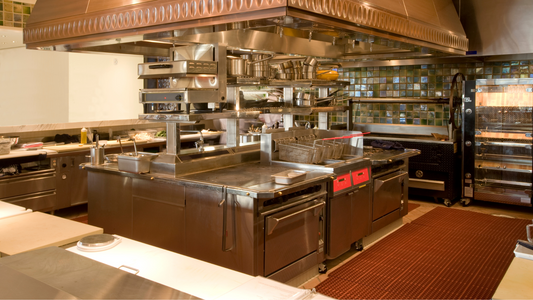
Add a fryer or a chargrill and the picture changes overnight. You've now triggered DW172 - the BESA specification for kitchen ventilation systems that environmental health officers, insurers and consultants all benchmark against. Ducted extraction to atmosphere. Make-up air. A duct route your landlord may or may not permit.
Go gas and you also need a BS 6173 gas interlock: gas physically will not flow unless the extraction system is proven to be running.
Here's the part that catches people out. On a small-to-mid site, a bespoke canopy and duct run can cost more than the cooking equipment underneath it. You budget £3,000 for a fryer and a griddle, then find the ventilation is a five-figure conversation.
So decide honestly. Not "we might do a bit of food later." Later is a full refit.
If the answer is yes, price the extraction before you price the cooker. If it's no, spend the saving on better back bar kit and a bigger ice machine - because that's what a wet-led pub actually runs on.
What every pub needs behind the bar
Wet-led or food-led, the back bar is identical. This is the non-negotiable core.
Bottle coolers and back bar refrigeration. Your working stock lives here, not in the cellar. Fan-assisted, glass-fronted, LED-lit, holding a genuine +2°C to +9°C through a busy service — not a domestic fridge with the door opened four hundred times a night. The Contender 220L Double Door Bottle Cooler sits at around £380 ex VAT: fan-assisted, +2°C to +9°C, LED interior, four adjustable shelves, hinged or sliding. Sliding doors if your gangway is tight. Browse the bottle coolers and back bar fridges range before you commit to a layout.
A glasswasher. Not a dishwasher. It runs a 400mm basket on a two-to-three minute cycle with a high-temperature final rinse, which is what gives you a clean glass and a head that holds. The Contender PRO Glasswasher with 400mm basket is £967.95 ex VAT. Site it under the bar near the return point, with a proper drain fall - a glasswasher in the cellar is a glasswasher nobody uses.
An ice machine. The most commonly under-specified item in any British pub. The Contender Ice Machine at 47kg per 24hr is £970.81 ex VAT; the 85kg version is £1,385.73 ex VAT.
Cellar cooling and keg storage. Your cellar wants to hold steady in the low teens for cask, cooler still for keg lines - in August as well as February. Line lengths, python runs, remote coolers: get a cellar engineer in before you take the lease.
Bar blenders. For frozen cocktails or milkshakes, a Quattro 2.7L Bar Blender is £114.58 ex VAT, and the 3.8L with a sound cover is £144.05 ex VAT. (The sound cover isn't a luxury in a room where people are trying to talk.)
Now the argument that matters more than any individual product.
Size your ice and your glasswashing to peak, not average. A Saturday match day in Leeds or Manchester runs three to four times a quiet Tuesday. Spec a 47kg ice machine against your weekly average and you'll run dry at 4pm on a derby day with a queue three deep - with no way back, because ice takes hours to make and minutes to sell.
Same logic on glasses. Average throughput tells you nothing. Peak throughput tells you whether you're washing or serving.
The rest of the back bar range sits on our bar and pub equipment page, across the Contender mid-range and Quattro budget own-brand collections, with the glasswasher and dishwasher range covering the step up if you go food-led.
Adding a kitchen: what changes
Say you've committed to food. What actually lands on the order?
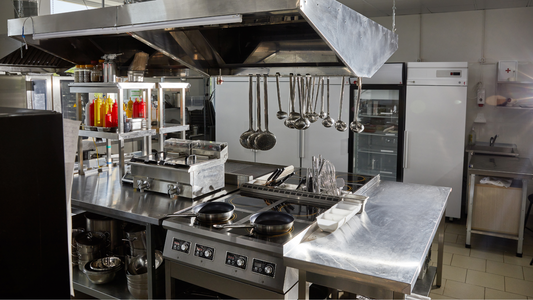
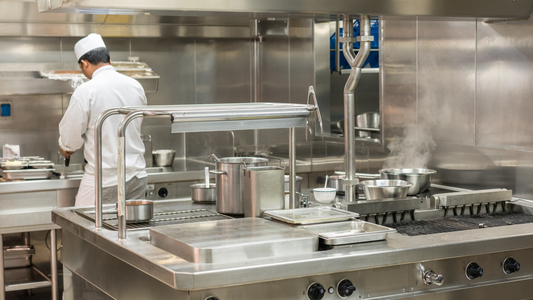
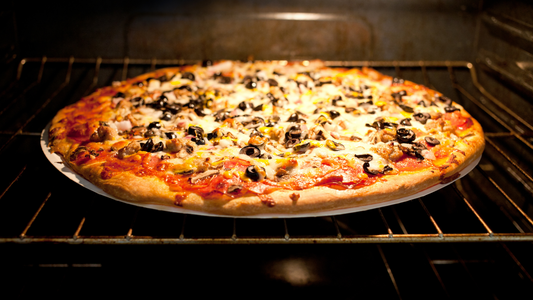
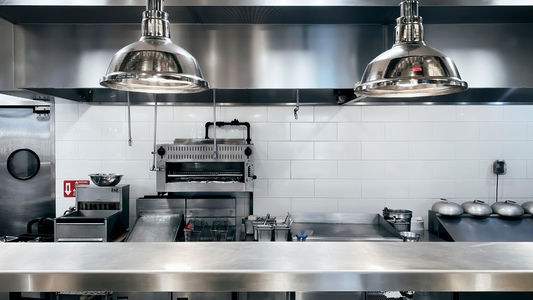
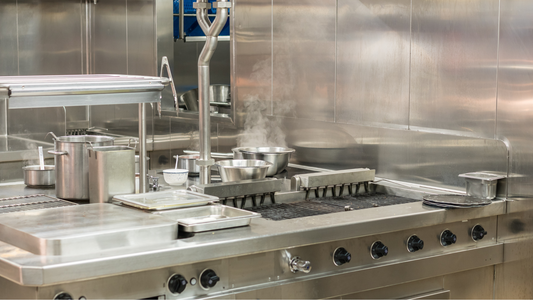
A compact cooking line first - typically a fryer, a griddle or chargrill, a convection oven, and a deck or pizza oven if that's your offer. None of it is exotic, and none of it is especially expensive.
Then the things nobody budgets for.
- The canopy and ductwork. Specified to DW172, routed to atmosphere, with make-up air. A design job, not a purchase.
- The gas interlock. BS 6173, if any part of your line runs on gas. Commissioned and certificated.
- Grease filtration and access panels, so the duct can actually be cleaned.
- Extra refrigeration. A kitchen needs its own cold storage. Your bottle coolers are not food storage.
- Warewashing at 500mm. Plates don't fit a glasswasher basket. You need a second machine.
- A dedicated hand-wash basin. Non-negotiable. The EHO will look for it in the first ninety seconds.
- Prep tables, sinks and a cleaning programme from day one - dosing, routine and records, not a cupboard with some spray in it.
The cost jump is real. A wet-led back bar is a four-figure conversation. A food-led pub kitchen, once extraction and services are in, is comfortably a five-figure one — and the ventilation is often the largest single line.
For the full financial picture rather than just the kit, see how much it costs to open a pub in the UK.
The three tiers: what a pub setup actually costs
Every figure below is equipment only, excluding VAT — no installation, extraction, ducting, services, commissioning or fit-out. I repeat it at every tier because it's the most common misreading of any price list, including ours.
- Entry - wet-led, minimal or no food: £4,000–£8,000 (equipment only, ex VAT). Bottle coolers, glasswasher, ice machine, blenders, bar sundries. No canopy, no cooking line. A tight back bar that trades properly from week one.
- Mid — food-led pub with a working kitchen: £10,000–£20,000 (equipment only, ex VAT). Everything above, plus a compact cooking line, kitchen refrigeration, a 500mm-basket dishwasher, prep tables and sinks. Extraction is not in this figure. Neither is installation.
- Premium — gastropub with a full kitchen and beer garden servery: £25,000–£45,000 (equipment only, ex VAT). Multi-section cooking, serious refrigeration volume, high-output ice, a second outdoor servery, pass-through warewashing. Again: equipment only, ex VAT, with extraction, services and fit-out on top.
Where does the rest go? Equipment tends to account for roughly 40–50% of a total fit-out. Quoted £20,000 of kit? Plan for about double once the room is finished.
Bundles built for pubs
We package kit by venue because operators kept asking us to. Three are built specifically for pubs, prices as listed on site.
- The Back Bar Bundle - £1,099.99. Bottle cooler, ice machine and blender. The wet-led starting point in one delivery.
- The Pub Kitchen Bundle - £1,599.99. Contender 216L bottle cooler, 3-door refrigerated prep counter, 520mm single tank electric fryer and a twin deck pizza oven. Your first food offer, sensibly matched.
- The Beer Garden Kitchen - £1,149.99. Contender 220L bottle cooler, 57L convection oven, 2-door pizza and sandwich prep counter, plus a Quattro 900mm centre prep table. For the outside trade you'll live on from May to September.
The case isn't only price, though bundle pricing does sit below the sum of the parts. Matched Contender and Quattro units share footprints, voltages and shelf heights, so your worktops line up. One consignment. One delivery slot. One warranty conversation instead of five.
See the full range on our bundles collection.
Compliance: what an EHO and your insurer will look for
Two different audiences, overlapping paperwork.
Licensing Act 2003. Your premises licence carries conditions, and some are equipment-shaped — measures, glassware policy, CCTV, and in some areas polycarbonate requirements on match days. Read your conditions before you buy glass.
Glasswashing hygiene and your FHRS score. Even a wet-led pub gets inspected. A commercial glasswasher with a hot final rinse, a separate hand-wash basin, and a documented cleaning routine are the basics. Your rating is earned in week one, not month six.
Cellar temperature control. Records matter here - a warm cellar is a food safety conversation as well as a beer quality one.
DW172 and BS 6173 if a gas kitchen goes in. Design certification and interlock commissioning, both documented.
TR19 grease duct cleaning records. This one costs people money. Insurers routinely ask for evidence of duct cleaning frequency after a kitchen fire, and a missing record is a declined claim. Set the schedule on day one and keep the certificates.
None of it is exotic. It's just far easier to build in than to retrofit.
Seven mistakes we see in new pubs
- Sizing ice and glasswashing to average trade. Peak is the number that breaks you. Average is a comfort blanket.
- Committing to food without pricing extraction. The canopy can cost more than the cooker. Get ventilation designed before you buy a single burner.
- Putting domestic appliances behind the bar. A domestic under-counter fridge fails on duty cycle, fails on temperature recovery, and may well invalidate an insurance claim.
- Ignoring the cellar until after completion. Line lengths, remote coolers and cooling capacity are lease-stage questions, not week-one questions.
- Buying the bar and forgetting the beer garden. Outside trade carries the margin from May to September, and it needs its own refrigeration and service point.
- No hygiene and cleaning programme from day one. Chemicals, dosing, routine, records. The cheapest compliance you'll ever buy.
- Skipping the power check. Ovens, fryers and pass-through warewashing have real electrical demands. Check the incoming supply before you sign the lease, not after the kit's on a pallet outside.
Notice how few of those are about choosing the wrong brand of fridge? Almost none of the expensive mistakes in this trade are product mistakes. They're sequence mistakes.
When to bring in a Key Account Manager
There's a point where a website stops being the right tool. Usually it's when the room is unusual - a listed frontage, a cellar you can't get a keg through, a beer garden with no covered power, a duct route the landlord won't sign off. That's when you ring us instead of clicking.
The mistake isn't buying the wrong glasswasher - it's buying any of it before anyone's looked at the cellar. We'd rather spend twenty minutes at your cellar hatch and behind your bar before you spend a penny than take the call three weeks later about an ice machine with nowhere to drain.
Our commercial team works with pubs across Leeds, Manchester and the North West, and the pattern is consistent: the sites that go well are the ones where somebody measured the doorway and looked at the fuse board before the order went in. You'll find the team on our meet the team page.
If cashflow is the constraint rather than the spec, look at our finance and leasing options before you compromise on kit you'll live with for a decade.
Frequently asked questions
What equipment do I need to open a pub in the UK?
Every UK pub needs bottle coolers or back bar refrigeration, a commercial glasswasher, an ice machine, cellar cooling and keg storage, and bar blenders. Add a compact cooking line and an extraction canopy only if you're serving food.
That's the honest baseline for a wet-led site. Food-led pubs add kitchen refrigeration, a 500mm-basket dishwasher, prep tables, sinks and a dedicated hand-wash basin on top of the cooking line.
How much does it cost to equip a pub?
Expect £4,000–£8,000 for an entry-level wet-led pub, £10,000–£20,000 for a food-led pub kitchen, and £25,000–£45,000 for a premium gastropub. All figures are equipment only, excluding VAT, installation, extraction, services and fit-out.
Equipment is typically 40–50% of a total fit-out, so double the figure for a rough all-in planning number.
Do I need a glasswasher and a dishwasher in a pub?
If you serve food, yes - you need both. A glasswasher takes a 400mm basket and is designed for glassware; a dishwasher takes a 500mm basket and handles plates, trays and pans. One machine cannot do both jobs properly.
Glasses washed alongside greasy plates come out with a film that kills head retention. A wet-led pub with no food offer needs the glasswasher only.
What size ice machine does a busy pub need?
A 47kg per 24hr machine at £970.81 ex VAT suits most standard trade; a busy or match-day pub should step up to the 85kg per 24hr unit at £1,385.73 ex VAT. Always size against peak days, never weekly average.
A Saturday match day in Leeds or Manchester can run three to four times a quiet Tuesday, and ice takes hours to produce and minutes to sell. Browse the ice machine range to compare outputs.
Do I need extraction if my pub serves food?
Yes. Any pub with a cooking line needs mechanical extraction designed to DW172, the BESA specification for kitchen ventilation systems. If any appliance runs on gas, you also need a BS 6173 gas interlock so gas cannot flow unless extraction is proven running.
A wet-led pub with no cooking needs neither. That distinction is the biggest cost fork in this checklist - on a small site the canopy and ductwork can exceed the cooking equipment itself.
Can I lease pub equipment in the UK?
Yes. Leasing and interest-free instalment options are both available for UK businesses, subject to status, trading history and credit checks. Leasing typically requires an established trading record; shorter-term interest-free options have lighter criteria.
Leasing suits operators preserving working capital for stock and staff. Buying suits long-life assets like stainless furniture and refrigeration. Most licensees blend the two. Details on our finance page.
Where to go next
If you're specifying kit rather than reading about it, start here:
- Everything you need to run a successful bar or pub - the full pub equipment range in one place
- What commercial catering equipment do I need? - the venue-by-venue framework this article sits inside
- How much does it cost to open a pub in the UK? - the cost picture beyond equipment
- Opening a restaurant: the complete UK equipment checklist - if food is the main event
- Opening a café: the complete UK equipment checklist - if you're trading all day rather than all evening
Get the food decision right, size your ice and glasswashing to your worst Saturday rather than your average Wednesday, and buy commercial from the start. Do those three things and the rest is detail.
Good luck with the opening. Send us the doorway measurements before you send us the order.
Andrew
Prices shown excluding VAT as of 20th August 2026 and are subject to change. Bundle prices are as listed on site. Cost bands cover equipment only and exclude installation, extraction, services and fit-out. Always check product specifications to ensure equipment meets your kitchen's requirements.
This article is for informational purposes. Business and finance decisions should account for your specific circumstances, local regulations, and professional advice where appropriate.