I'm Andrew Pickersgill, Managing Director at eCatering. Thirty years in this trade, and I still watch people walk in with a number in their head that bears no relationship to what actually leaves their bank account.
Nobody gives you a straight answer on this. So here's ours: an honest look at the cost to open a pub UK operators are facing right now, based on what our customers actually spend in 2026. No single figure, because a single figure would be a lie. Ranges, with the reasoning behind them.
Some of this you can control. Quite a lot you can't. The trick is knowing which is which before you sign anything — and if you're working out what goes in the building, our guide to what commercial catering equipment you actually need covers that in depth.
The short answer
For most people taking on a pub in the UK, expect £20,000 to £150,000 to get the doors open and survive the first few months.
That's a wide gap, because the two ends of it are genuinely different businesses:
- £15,000–£50,000 — a tied tenancy on a pub that's already trading, already fitted out, already licensed. You buy stock, pay a deposit, pick up the keys.
- £50,000–£250,000 — a free-of-tie leasehold where you're refitting the trading areas, putting in a kitchen, building the offer from scratch.
- £300,000 and well beyond — freehold. Average UK freehold pub sale prices sat around £800,000 in early 2026 according to Fleurets, down roughly 9% year on year. Rural sites go from about £60,000; prime London passes £3 million.
What drives it? Four things, in order of impact: your property route, whether you're putting in a kitchen, the condition of the building, and how much cash you keep back for the first six months. Get the first right and the rest are manageable. Get the last wrong and none of the others matter.
Route one: leasehold, tenancy or freehold?
The single biggest cost fork in the whole exercise, and people rush it.
Tied tenancy. You rent from a pub company and buy your drinks through them. Ingoings are typically £5,000–£30,000 — a deposit of four to six weeks' rent, stock at valuation, sometimes a fixtures contribution. Rent often sits at £12,000–£15,000 a year for a mid-size community pub, because the pubco takes its return on supply margin rather than rent. Lowest barrier to entry in the trade, and the pubco carries structural repairs.
Free-of-tie lease. You buy your drink wherever you like, worth a great deal on gross margin. You pay for it in rent: £16,000–£20,000 a year is common for an independent site, more in a strong town centre. Ingoings jump too, because you're often taking a shell or a tired site — £50,000–£250,000 once premium, deposit, legals and fit-out are counted.
Freehold. You own the building. The cost of buying a pub outright is a property transaction with a business attached — commercial lender, proper valuation, and a survey well beyond a residential homebuyer's report.
Which is right? Depends on whether you want to buy a job or buy an asset. Both are legitimate. Not the same decision.
And get a professional stocktake before signing anything on stock at valuation. A few hundred pounds, and the cheapest insurance in this article.
Licensing and legal costs
Small numbers relative to everything else — but they gate the opening date, and a delay costs more than the fees ever will.
- Personal licence — the application fee is £37 in England and Wales, set nationally. The APLH qualification behind it runs roughly £30–£150, plus a criminal record disclosure. Budget £150–£300 per person. Statutory fees are not subject to VAT.
- Premises licence — banded on rateable value, from £100 (Band A) to £635 (Band E), with an annual maintenance fee thereafter. Premises mainly selling alcohol in Bands D and E attract a multiplier, so a city-centre bar can face an application fee approaching £1,905 and an annual fee around £1,050.
- Licensing solicitor or consultant — operating schedule, scaled plans, representations. Typically £750–£2,500, quoted excluding VAT.
- Planning — a full change-of-use application runs into the high hundreds in fees alone, and the drawings usually cost more than the application. Listed building or an external flue? Add time as well as money.
- Commercial conveyancing — a lease assignment or freehold purchase on licensed premises is not residential conveyancing. Expect £1,500–£5,000+ excluding VAT.
The fit-out: where the money actually goes
Here's the part that catches nearly everybody, and the reason I wanted to write this piece.
We use a rule of thumb internally, and it's held across hundreds of projects. Call it the 50/25/25 rule:
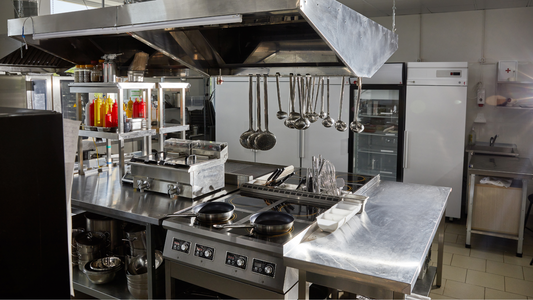
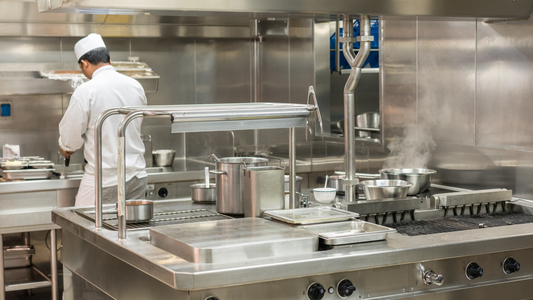
- 50% equipment — fridges, cooking line, glasswasher, ice machine, prep benches.
- 25% installation and services — electrics, gas, plumbing, extraction, ducting, commissioning. The unglamorous quarter.
- 25% fit-out — floors, walls, ceilings, front of house furniture, EPOS, signage.
Market data backs it up: equipment typically accounts for 40–50% of total fit-out spend. UK pub and bar fit-outs commonly run £50–£100 per square foot at medium specification and up to £145 at high spec, putting a medium-sized refit near £52,000–£97,500. Larger programmes routinely pass £250,000.
So the honest framing, and please write this on the back of your hand: if someone quotes you £40,000 of equipment, you need to find roughly £80,000. Anyone who tells you otherwise is quoting you for half the job.
Equipment costs by pub type
These bands are equipment only, excluding VAT — they exclude installation, extraction, ducting, services and fit-out. Every time you see one, add the other half.
- Entry, wet-led (minimal or no food): £4,000–£8,000 ex VAT. Back bar refrigeration, a glasswasher, an ice machine, cellar kit, a blender or two.
- Mid, food-led pub kitchen: £10,000–£20,000 ex VAT. Add a compact cooking line, a fryer, prep counters, a dishwasher.
- Premium gastropub (full kitchen plus beer garden servery): £25,000–£45,000 ex VAT.
What that buys. A Contender 220L Double Door Bottle Cooler is around £380 ex VAT — fan-assisted, +2°C to +9°C, four adjustable shelves. A Contender PRO Glasswasher with a 400mm basket is £967.95 ex VAT. A Contender Ice Machine at 47kg per 24 hours is £970.81 ex VAT (size it to a match-day Saturday in Leeds or Manchester, not a wet Tuesday — ice is the first thing to run out and the most embarrassing). A Quattro 2.7L Bar Blender is £114.58 ex VAT.
Rather not build the list line by line? The equipment bundles do the sizing for you: The Back Bar Bundle £1,099.99 as listed, The Pub Kitchen Bundle £1,599.99 as listed, The Beer Garden Kitchen £1,149.99 as listed. Our bars and pubs range groups the rest by category, and for the full line-by-line version, work through our pub equipment checklist — the natural next read after this one.
Mid-range kit comes from Contender; budget prep and support items from Quattro. Refrigeration sits in drinks fridges and bottle coolers, ice in commercial ice machines.
The costs people forget
Every one of these has derailed somebody's opening date.
- Three-phase power upgrade. Where the local network has capacity, a DNO connection charge runs roughly £1,500–£4,000. Where excavation or reinforcement is needed, £3,500–£15,000, with lead times of weeks to several months. Check the incoming supply before you sign the lease, not after you've bought the oven.
- Extraction. A bespoke canopy on a small-to-mid site is £2,500–£6,000 before ducting. Add a gas cooking line and you're into interlock territory, which can cost more than the appliances.
- Cellar cooling. Typically £2,200–£3,000 supplied and installed; ducted or split systems £2,000–£5,000 and up.
- EPOS. Hardware £1,500–£4,000 per till point, software £0–£250 a month, card processing 1.4%–2.2% per transaction. That last one is a running cost people never model.
- Glassware and smallwares. Unglamorous and relentless. Budget four figures and expect to spend it twice in year one.
- Signage. A-boards, illuminated frontage, consent for anything fixed to a listed building.
- Opening stock. £5,000–£15,000 typically, settling to £2,000–£10,000 a month once trading.
- Deposits. Rent, utilities, card acquirer. Cash out, sitting still.
Working capital: the number that sinks people
The section I'd keep if I could only keep one.
Pubs don't break even on day one. Most community pubs take 18 to 24 months to reach consistent profitability, and the hardest stretch is months two to four — when the honeymoon trade fades, the boiler goes, and the first VAT bill lands in the same week.
You need three to six months of running costs in reserve, on top of everything you've already spent. For a small-to-medium pub that's £10,000–£20,000 a month covering rent, wages, utilities, insurance and stock. Do that arithmetic and you get an uncomfortable answer.
Realistically: £15,000–£25,000 of accessible working capital minimum beyond your ingoings, and most new licensees need £15,000–£50,000 of personal capital once first-year living costs are counted.
Staffing is the biggest line and it's going one way. From April 2026 the National Living Wage is £12.71 an hour, the 18–20 rate £10.85, and employer National Insurance 15%. Add pensions and the true cost of a staff member sits well above the headline rate.
On business rates: the expanded retail, hospitality and leisure relief ended on 1 April 2026, replaced with a lower pub-specific relief, and a further 20% cut for pubs, social clubs and live music venues in England was confirmed in July 2026 for April 2027. Check your rateable value before budgeting on it.
How to fund it
Three routes, and most operators blend them.
Buy outright where the asset has a long life and low obsolescence — stainless benches, sinks, shelving, refrigeration. These last a decade, so there's no sense paying to finance them.
Spread the cost where the spend is lumpy and cashflow is tight in the first quarter. iwocaPay covers orders from £150 to £30,000, interest-free — Pay Now by bank transfer, or three equal interest-free monthly instalments. Open to UK limited companies, LLPs and sole traders. PayPal Credit carries no interest for four months on orders over £99.
Lease where you want the kit off the opening budget entirely. Be realistic about the criteria: leasing generally requires 18+ months of trading history, homeowner status and a good credit record, and a new tenant business usually needs a guarantor. For most first-timers, that makes leasing a year-two option rather than a day-one one.
Full details sit on our finance options page. And if you're weighing a pub against another format, our breakdown of what it costs to open a restaurant in the UK runs the same exercise for a different building.
Seven ways new operators overspend
Not three. Seven. Because the tidy list of three is never the real list.
- Buying kit before checking the power supply. The DNO does not care that your oven has arrived. The most expensive sequencing error in the trade.
- Budgeting for equipment and forgetting the other half. The installation quarter is the one nobody asks about until it's quoted.
- Sizing for average trade rather than peak. A match-day Saturday runs three to four times a Tuesday. Ice, glasswashing and fryer recovery fail at peak, never at average.
- Committing to a food offer without pricing the extraction. A wet-led bar needs no canopy. The moment a fryer or chargrill goes in, you've triggered ducting, possibly a gas interlock, and a five-figure conversation.
- Over-specifying front of house and under-specifying the cellar. Lovely chairs won't save you if the beer's warm.
- Buying piecemeal from five suppliers. Five lead times, five deliveries, five warranty conversations, and an opening date set by whoever is slowest.
- Opening with no working capital. The most common failure mode there is. Not a bad pub — a good pub that ran out of cash in month three.
When to bring in a Key Account Manager
There's a point where the spreadsheet stops helping and you want someone who has seen forty of these.
The mistake isn't buying the wrong bottle cooler — it's buying any of it before anyone's looked at the room. Twenty minutes on site in Leeds or Manchester before you spend a penny saves more than any discount we could give you. I've lost count of the sites where the kit was right and the doorway was three centimetres too narrow.
If your project is above roughly £5,000 of equipment, or a kitchen is going into a space that never had one, that's the moment to talk to a person rather than a checkout. You'll find the team on our meet the team page.
Frequently asked questions
How much does it cost to open a pub in the UK?
Most people spend £20,000 to £150,000 to open a pub in the UK. A tied tenancy on a trading pub can be done for £15,000–£50,000; a free-of-tie leasehold needing a refit runs £50,000–£250,000. Freehold is separate again, with average UK freehold pub prices around £800,000 in early 2026.
Is it cheaper to lease or buy a pub?
Leasing is far cheaper to enter and more expensive to run. A tied tenancy starts from around £5,000–£30,000 in ingoings, against a freehold purchase needing a six-figure deposit and commercial lending. Buying gives you an asset and no landlord; leasing gives you lower entry cost and less exposure. Most first-time operators lease.
How much does pub equipment cost?
Equipment runs £4,000–£8,000 ex VAT for an entry-level wet-led bar, £10,000–£20,000 ex VAT for a food-led pub kitchen, and £25,000–£45,000 ex VAT for a premium gastropub. Those bands are equipment only — they exclude installation, extraction, services and fit-out, which typically add as much again.
What licences do I need to open a pub and what do they cost?
You need a premises licence for the building and at least one personal licence holder as Designated Premises Supervisor. The personal licence fee is £37 in England and Wales, plus £30–£150 for the qualification. Premises licence fees are banded on rateable value from £100 to £635, with a multiplier for alcohol-led premises in the higher bands that can push a city-centre application towards £1,905.
How much working capital do I need to open a pub?
Hold three to six months of running costs in reserve — realistically £15,000–£25,000 minimum beyond your ingoings. Monthly running costs for a small-to-medium pub commonly sit at £10,000–£20,000. Most pubs take 18 to 24 months to reach consistent profitability, and months two to four are where undercapitalised operators fail.
Can I finance pub equipment?
Yes. iwocaPay covers orders from £150 to £30,000 interest-free, paid now by bank transfer or across three equal interest-free monthly instalments. PayPal Credit offers no interest for four months on orders over £99. Lease finance generally requires 18+ months of trading, homeowner status and good credit, so new businesses usually need a guarantor.
Where to go next
If you've read this far, you're taking it seriously. That puts you ahead of most.
- Start with the framework: what commercial catering equipment do I need
- Then the pub-specific version: opening a pub equipment checklist
- Browse the kit: equipment for bars and pubs
- Once you have a number, work out how to spread it: finance options
Get the property route right, keep six months of cash back, and treat the installation quarter as real money rather than a rounding error. That's most of it.
The rest is beer.
— Andrew
Prices shown excluding VAT as of 9 August 2026 and are subject to change. Bundle prices are as listed on site. Equipment cost bands cover equipment only and exclude installation, extraction, services and fit-out.
Cost ranges for property, licensing and professional fees are indicative and vary significantly by location, condition and negotiation. Always obtain your own quotes.
This article is for informational purposes. Business and finance decisions should account for your specific circumstances, local regulations, and professional advice where appropriate.