I've watched a lot of pubs lose the half-time whistle. Not the match - the whistle. The 15 minutes between the halves where a six-hundred-cover sport night is actually won or lost. The bar lead's heart rate climbs. The pass goes silent. The till queue snakes past the toilets. And by the time the second half kicks off, a quarter of the customers who wanted a fresh pint have given up and gone back to their seat with whatever was already in their hand.
That's a £200 to £400 hole in your night. Every match.
This is the tactical guide to closing it.
Why half-time is the most expensive 15 minutes in your week
A 600-cover sport night runs hot in two windows. The pre-kick-off rush from around 8.30 to 9pm. And half-time, somewhere between 9.45 and 10pm. Roughly 80% of food orders land in those two windows. Roughly 50% of all drinks pour. The rest of the night is gentle.
But the half-time bell is brutal in a way the pre-kick-off rush isn't.
Pre-kick-off, customers arrive in waves. They've got 30 minutes. They're patient.
At half-time? You've got 15 minutes. Around 300 drinks reordered. Around 150 food orders fired. Around 1,200 glasses needing to come back through the bar - pints, halves, wines, soft drinks, the lot. And every single till in the building queues up at once.
Get it wrong and you lose 20-30% of potential half-time revenue to bottlenecks. £200-£400 per match. Across an eight-week tournament window, that's the cost of a new fryer left on the floor.
It's recoverable. But only if you treat half-time like a formation - eleven players, fixed positions, rehearsed.
The principles of fast turnaround
Five principles. Not three. Three is what every other operations blog gives you, and three isn't enough.
-
Pre-stage everything that can be pre-staged. Glasses, garnishes, chip baskets, plates.
-
Two parallel queues at the bar. One card-only, one cash-only. Splits the queue in half.
-
Glasswasher running continuously. Never idle. Never empty. Never stacked.
-
Pre-pour pints from five minutes before half-time. Buys you a five-minute head start.
-
Pre-portion food before the whistle blows. Chips weighed. Patties stacked. Wings counted.
Everything that follows is just the detail of those five.
The bar formation
Think of the bar as eleven positions. Some pour. Some take payment. One calls. One runs glasses. None of them improvise.
Pour stations
One pourer per 100 covers, minimum. On a 600-cover night that's six pourers behind the bar at half-time, and if you're trying to do it with four you've already lost.
Stage clean glasses in racks of 12 or 16, racked to the pourer's dominant hand. Pre-pour 50% of pints from five minutes before the whistle - keeps you a five-minute head start when the rush hits. Use a straight glass for pre-pour where you can. Less head loss when it's stood for two minutes.
The other 50%? Poured live, on demand, fresh head, customer happy.
The till queue
This is where most pubs bleed money.
Two tills running. One card-only. One cash-only. The contactless limit raised to £100 back in 2021 means 90%+ of single-round transactions clear in under three seconds. Card-only tills move twice as fast as a mixed till.
Don't take orders over the bar from the garden. Use a separate runner with a wireless terminal - works the garden tables, takes the order, fires it to the line, takes payment in the open air. Keeps the bar queue for the indoor crowd.
(One pub I worked with in Brighton's North Laines added a single garden runner during the 2024 Euros. Their half-time turnover went up 18%. One person. One terminal.)
The glasswasher
The glasswasher is the heart of half-time. If it stops, everything stops.
A Contender PRO 400mm glasswasher runs roughly 120-second cycles, around 30 glasses per basket - about 900 glasses an hour theoretical. Pair it with a Contender PRO500 dishwasher (which washes up to 500 plates an hour) for the bigger glasses, the pint pots and the kitchen kit it's also covering.
Keep both running continuously through the 15 minutes. Never let baskets stack on the side. The moment a clean cycle finishes, the next dirty basket goes in. The KP works in a loop.
Rinse aid topped up. Detergent topped up. Filters cleaned at half-time, not after. A glasswasher that runs out of rinse aid mid-rush is a glasswasher that adds 20% to your cycle time and 100% to your bar lead's stress level.
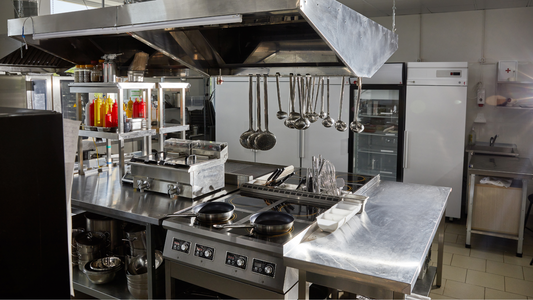
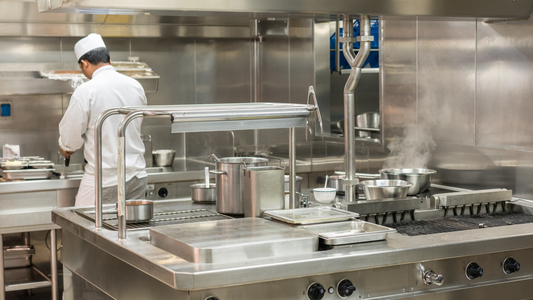
The kitchen formation
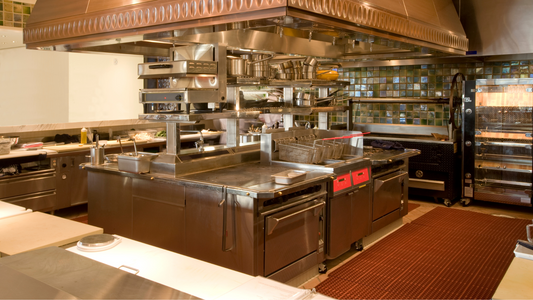
The bar is half the battle. The other half is the kitchen, and the kitchen is harder because food has thermal lag.
Pre-portion before the whistle
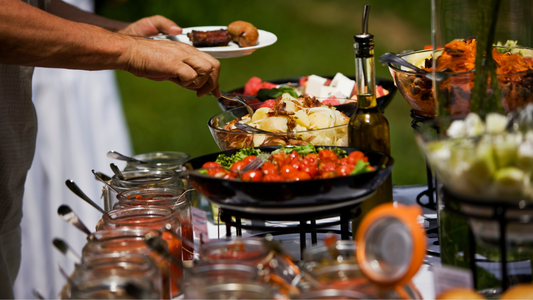
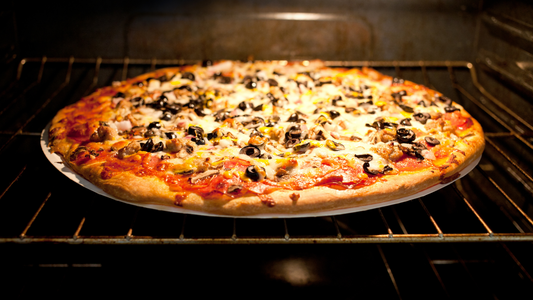
Anything that can be weighed, bagged, racked or pressed gets done before kick-off. Chips weighed into 200g portions, bagged in deli paper. Burger patties stacked between greaseproof, ready to fire. Sauces portioned into ramekins. Pizza dough pressed and stationed with toppings. Wings counted out, pre-marked in trays of 8 or 12.
When the whistle blows, the chef isn't weighing. They're plating.
Drop the fryers 5 minutes before half-time
This is the one most kitchens get wrong.
A Quattro FSN003 24L gas fryer recovers in roughly 60 seconds - meaning if you drop a basket of frozen chips, the oil's back to temperature in a minute. Drop two baskets at the 40-minute mark of the first half. Hold them in a chafer dish at half-time. Plate as the orders fire.
Drop on the whistle and you've already lost 90 seconds of recovery before a single chip is golden. By the time the second half kicks off, half your customers haven't seen their food.
One pass, two stations
Split the pass. One station plating. One station handing out. Numbered ticket system over verbal call-outs - verbal in a 90-decibel pub is a fight you'll lose.
"Closed kitchen" sign at the 60-minute mark of the second half. Protects your clean-down. Protects your last orders queue from creep. The kitchen team that's been on since 6pm is finished by 11.15, not 11.45, and you'll see it in your retention.
The cooling formation
Cold drinks come out the bottle cooler. The bottle cooler doesn't make the drinks cold - it keeps the drinks cold. Big difference.
Stock the cooler to capacity 30 minutes before kick-off. A 220L single-door cooler holds around 150 bottles. A 320L triple-door holds around 225.
Top-up stockcheck at half-time itself - during the whistle, not after. The KP runs a tray of warm bottles from the cellar and stages them in the back-of-house fridge for the second half. They won't be cold by 10pm. They will be cold by full-time.
Recovery time matters more than headline capacity. A cooler that gets opened 200 times in 15 minutes warms up. The Contender 320L triple (£1,089.98 inc VAT) is the workhorse for high-volume bars because the recovery spec holds - the compressor pulls back to temperature inside 10 minutes even on the worst night.
Worth pairing with an ice machine sized to your peak rather than your average. A bar that runs out of ice at half-time isn't a bar.
The crew formation
Eleven players. Fixed positions.
-
One bar lead orchestrating the bar. No pouring. No tilling. Just calling - calling drinks orders to the line, calling pours to the staging area, calling the glasswasher cycle.
-
One kitchen porter on dedicated glass return. Their entire job at half-time is running glasses from garden tables and floor tables back to the wash. Nothing else. Not a swap. Not a stand-in.
-
One floor lead working the queue at the bar. Managing flow. Calling drinks orders forward. Spotting the customer with three rounds and routing them to the cash till.
Pre-shift briefing at 7pm. Five-minute reset at the half-time whistle - bar lead claps once, calls the formation, points to positions. Boom. Go.
What good looks like - the half-time bell
Picture this.
The whistle blows at 9.45pm. The bar lead has already pre-poured 100 pints into chilled glasses on the back bar. The first 100 customers walk straight up, hand over a card, take the pint. Ninety seconds, gone.
The fryers have recovered. The chips are bagged in chafers. The pass is plating burgers as fast as the chips come out. Five-minute service window. The tickets clear like a tide going out.
The glasswasher is on cycle 7 of 8. The KP has run the second tray of glasses back from the garden and the third tray's already on the way. The floor lead is calling the cash-only till for round-buyers and the card-only till for solo pints, and the queue is six-deep and moving.
The second-half whistle blows at the 15-minute mark. Bar lead's done £1,800 in 15 minutes. Kitchen's done 130 plates. The floor's clean enough to walk on.
That's what good looks like.
What goes wrong (and how to fix it)
Seven failure points, because three isn't enough and football has eleven players for a reason.
-
Glasswasher backs up. Fix: continuous running, second machine on standby, rinse-aid checked at the 7pm briefing.
-
Bottle cooler temperature drift. Fix: rotate stock from the cellar fridge during half-time, not after. Cellar's already cold.
-
Fryer cold-drop on the rush. Fix: drop five minutes before half-time, hold in chafer.
-
Till queue stalls. Fix: two tills, one card one cash; floor manager runs orders from garden on a wireless terminal.
-
Garden glass pile-up. Fix: dedicated KP on glass return, plastic glass policy after 11pm, signage telling customers to leave glasses on garden tables not on the floor.
-
Toilet queue blocks the bar. Fix: signage redirecting to a second toilet block. Sounds small. Saves you 20 covers a night.
-
Goal during half-time celebration. Fix: pre-staged second wave of pints behind the bar, ready to go on the cheer. Half the bar's already paid for the next round before the whistle blows.
When to bring in a Key Account Manager
If you're running a multi-site group, doing a full bar refit before the tournament, or building out a beer garden that's going to take 200+ covers on a Saturday - that's where a Key Account Manager pays for itself.
Andy Whitehead is our Commercial Director. He's spent the last decade specifying kit for high-volume venues - pubs in Manchester's Northern Quarter, sports bars in Glasgow, beer gardens in Brighton's North Laines, hotel bars in Edinburgh's Old Town. He sizes the kit to the worst 15 minutes of the night, not the average.
"The half-time problem is never one bottleneck - it's always three at once. Glass turn, bottle cooler recovery, and fryer drop. Fix any one of them and the night still falls apart. Fix all three and you're suddenly doing £400 more an hour. We size the kit around the worst 15 minutes of the night, not the average."
- Andy Whitehead, Commercial Director, eCatering
Trigger thresholds for a KAM call: spending £3k+ on a single project, full bar refit, multi-site rollout, or a beer-garden buildout that needs power, water and refrigeration coordinating. Speak to Andy and the team before the tournament starts - diaries shorten fast in May.
Frequently Asked Questions
How many drinks are sold during half-time at a pub?
Around 50% of total match-day drinks pour happens in three windows: pre-kick-off, half-time and post-goal celebrations. Half-time alone accounts for roughly 25% - about 300 drinks across a 600-cover night, in 15 minutes.
How do you turn tables fast in a pub?
Pre-stage everything: glasses pre-poured, food pre-portioned, two tills running (one card, one cash), glasswasher continuous, dedicated KP on glass return. The 15-minute window doesn't allow a single delay.
What's the best glasswasher for a busy pub?
A Contender PRO 400mm with detergent and rinse aid pumps runs around 30 baskets an hour - 900 glasses an hour theoretical. Pair it with a Contender PRO500 dishwasher (washes up to 500 plates an hour) for pint pots and kitchen kit. Browse the full glasswasher range.
How do you handle a half-time food rush?
Pre-portion everything before kick-off - chips weighed, patties stacked, wings counted. Drop fryers five minutes before the whistle, hold in chafer dishes. Run two pass stations at half-time, not one. Numbered tickets, not verbal call-outs.
Should I take card or cash at the bar on a busy match day?
Both. But on separate tills. One card-only, one cash-only. The contactless limit's been £100 since 2021, so most rounds clear in under three seconds. Splitting the queue cuts wait time in half.
How do I keep beer cold during a high-volume sport night?
Stock the bottle cooler 30 minutes before kick-off. Top-up stockcheck during the half-time whistle, not after. Recovery time on the cooler matters more than headline capacity - the Contender 320L triple-door (£1,089.98 inc VAT) is the workhorse for high-volume bars.
Now - go and run the bar like you mean it
Pre-stage. Parallel queue. Continuous wash. Pre-portion. Recovery before the rush, not after.
That's the playbook. Drilled into a crew that knows the formation, it'll add £200-£400 to a Saturday and shave 20 minutes off the clean-down. Across the World Cup window, that's the cost of the kit you've been putting off buying.
Three things to do next:
-
Read the pillar World Cup pub equipment strategy guide for the full setup - bar, kitchen, garden, cellar, the lot.
-
Browse the World Cup 2026 landing page for the Match-Day Master and Rapid Response Set bundles. Sized for the worst 15 minutes of the night.
-
Shop the World Cup collection for kit available before the tournament starts.
-
Talk to Andy and the Key Account team if you're planning a refit or a multi-site rollout.
-
Spread the cost - finance options are available on most kit over £1,000.
The whistle blows in eight weeks. Don't be the pub that loses the half.
Now - go and run the bar like you mean it.
- Andrew
Andrew Pickersgill is Managing Director of, supplying commercial catering equipment to UK pubs, restaurants and hotels since 2003.
────────────────────────────────────────
Prices shown including or excluding VAT as noted, as of May 2026, and subject to change. Capacity and throughput figures are indicative - always size kit to your actual peak load.