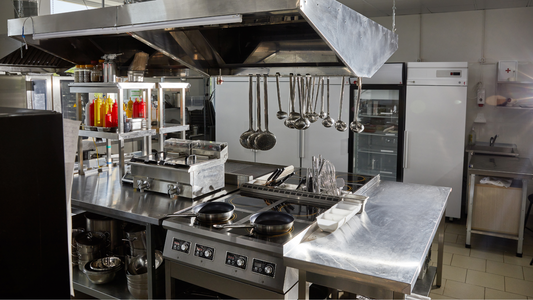
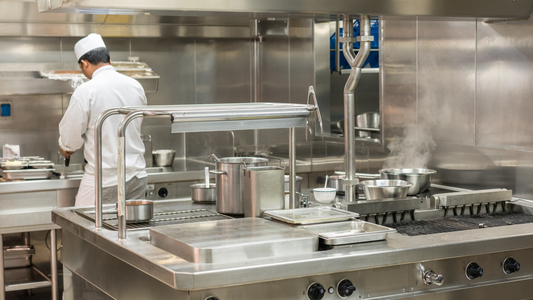
Nobody gets excited about buying a prep table. It's a flat piece of stainless steel on legs - hardly the centrepiece of a kitchen fit-out. But spend a week working on a table that's the wrong height, the wrong depth, or wobbles every time you lean on it, and you'll realise why getting this right matters more than it should.
Commercial prep tables are the workhorses of every kitchen. They're where food gets portioned, plated, dressed, and assembled. A well-chosen bench supports the flow of service. A poor one creates bottlenecks, hygiene issues, and back pain.
Here's what to look for, what to avoid, and how to choose the right prep tables for your space.
Types of Commercial Prep Table
Stainless steel prep tables come in a few standard configurations. The right one depends on where it's going and what you're doing on it.
Wall Tables (with Upstand)
Wall tables have a raised rear edge - typically 50–100mm high - called an upstand or splashback. This lip prevents food, water, and debris from running down behind the table and into the gap between the bench and the wall.
If you're positioning a table against a wall (which most kitchens do), a wall table is the correct choice. The upstand keeps the wall cleaner, makes EHO inspections simpler, and stops small items rolling off the back where nobody can reach them.
Wall tables are the most commonly purchased type in UK commercial kitchens.
Centre Tables (Flat Top)
Centre tables have no upstand. The surface is completely flat on all sides, which means they can be accessed from any direction. They're designed for island-style positioning in the middle of a kitchen, where chefs work from both sides.
Useful for large prep kitchens, pastry work, plating stations, or any layout where a bench needs to sit away from walls. Less common in small kitchens simply because most layouts push furniture to the perimeter.
Prep Tables with Undershelves
Most commercial prep tables come with a lower shelf between the legs. This undershelf is genuinely useful - it provides storage for pans, containers, chopping boards, and equipment that would otherwise clutter the work surface or end up on the floor.
Some tables have a solid undershelf; others have an open-frame shelf. Solid shelves are easier to keep clean and can hold smaller items. Open-frame shelves allow better airflow and are lighter, but things fall through the gaps.
Adjustable undershelves let you raise or lower the shelf height to accommodate different-sized items underneath. This is a small detail that makes a practical difference if you're storing tall stock pots or deep gastronorm pans.
Specialist Prep Stations
Beyond standard flat tables, you'll find:
-
Prep tables with drawers - Built-in drawer units for knife storage, utensils, or prep tools. Keeps the surface clear without needing a separate storage unit.
-
Prep tables with sinks - Integrated single or double sink bowls for washing produce or cleaning tools during prep. Saves space in tight kitchens where a separate prep sink won't fit.
-
Bench-over stations - Elevated shelving mounted above the table surface. Used for holding service tickets, heat lamps, or plated dishes ready for collection. Common at pass and plating stations.
-
Mobile prep tables - Tables on lockable castors that can be wheeled to wherever they're needed and locked in place during use. Ideal for kitchens that need to reconfigure for different services or events.
Choosing the Right Size
Width
Commercial prep tables range from 600mm up to 2,400mm in width. The right width depends on your available space and how many people will work at the table simultaneously.
-
600–900mm - Suitable for single-person prep stations or tight spaces where you need a compact surface. Fine for garnishing, plating, or light prep work.
-
1,200–1,500mm - The most popular size range for restaurant kitchens. Gives one person a comfortable working space with room for chopping boards, containers, and mise en place. Two people can work side by side at the wider end.
-
1,800–2,400mm - For busy prep kitchens, banqueting operations, or anywhere multiple chefs need to work simultaneously on the same surface.
Depth
Two standard depths dominate the market:
-
600mm deep - The standard for most kitchens. Matches the depth of commercial counter fridges, dishwashers, and sinks, so everything lines up along a wall for a clean, flush run.
-
700mm deep - Gives you extra work surface front-to-back, which matters for pastry work, plating large dishes, or any task where 600mm feels cramped. Also matches some wider-body counter fridges and cooking equipment.
Pick the depth that matches your other equipment. A 600mm table next to a 700mm counter fridge means an awkward step in your counter line, which interrupts workflow and creates a gap that catches crumbs and grease.
Height
Standard commercial bench height is 850–900mm, which is comfortable for most adults during standing prep work. If your team is particularly tall or short, some manufacturers offer adjustable-height legs, but most kitchens work fine with the standard.
More important than the height itself: make sure the legs have adjustable feet. Kitchen floors are rarely perfectly level, and a prep table that rocks every time someone leans on it is a daily irritation. Adjustable feet let you level the table on uneven floors and ensure stability.
Stainless Steel: What Grade Do You Need?
Not all stainless steel is the same. The grade affects durability, corrosion resistance, and long-term appearance.
Grade 304
The gold standard for commercial kitchens. Contains 18% chromium and 8% nickel, which gives it excellent corrosion resistance - even against acidic foods, salt, and frequent cleaning with commercial detergents.
Grade 304 resists rust, maintains its appearance over years of heavy use, and is classified as food-grade stainless steel. If you're buying prep tables for a long-term fit-out, 304 is the right choice.
Grade 430
A lower-cost alternative containing 16–18% chromium but no nickel. It's acceptable for food contact and widely used in budget catering furniture. However, it's more susceptible to corrosion from acidic foods, salt, and aggressive cleaning chemicals over time.
Grade 430 tables will do the job in a kitchen that treats them carefully. But in a busy environment with heavy daily use, frequent cleaning, and exposure to acidic ingredients, 430 steel can show rust spots and staining within a couple of years - particularly at weld points and edges.
Grade 201
Sometimes marketed as an alternative to 304, Grade 201 uses manganese instead of nickel to reduce cost. Corrosion resistance sits between 430 and 304. It's a reasonable mid-range option, though less widely available in the UK catering market.
Which Grade Should You Buy?
For a table you'll use every day for years, Grade 304 is worth the premium. The price difference is typically 15–25% more than 430, but the table will outlast cheaper alternatives and maintain its appearance. Grade 430 is fine for back-of-house storage tables, light-duty use, or temporary setups where longevity isn't the priority.
If you're looking at options, our stainless steel tables and benches range includes wall tables and centre tables in multiple sizes - all in catering-grade stainless steel with free delivery.
What to Look For When Buying
Beyond type, size, and steel grade, a few details separate a good prep table from a frustrating one.
Leg construction and bracing. Look for tables with cross-bracing between the legs or welded corner gussets. These resist the lateral forces that make tables wobble - and a prep table gets leaned on, bumped, and loaded unevenly hundreds of times per day. Thin legs without bracing will develop a wobble within months.
Weld quality. Smooth, fully sealed welds are a food safety requirement. Gaps, pinholes, or rough welds create places where bacteria can harbour and cleaning can't reach. Run your hand along the welds before accepting delivery. If they're rough or incomplete, reject the table.
Edge finish. The table edges should be rolled, folded, or smooth-finished. Sharp or raw-cut edges are a cut risk during busy service and indicate poor manufacturing standards.
Adjustable feet. As mentioned - essential for levelling on uneven floors. Look for screw-type adjustable feet rather than rubber caps, which compress unevenly and lose their grip over time.
Undershelf height. Check that the undershelf clears your standard gastronorm pans or storage containers. Some tables position the shelf too low or too high for practical use.
Placement and Kitchen Layout
Where you put your prep tables matters as much as which ones you buy.
Keep raw and cooked prep separate. UK food safety regulations require that raw meat and ready-to-eat food are prepared on separate surfaces, or that surfaces are thoroughly cleaned and disinfected between uses. Dedicated prep tables for raw and cooked items - ideally in different areas of the kitchen - is the simplest way to manage this.
Position prep tables near their related equipment. A veg prep table works best next to the prep sink and close to the fridge where produce is stored. A plating table should sit near the pass and close to the hot line. Forcing staff to walk across the kitchen between prep and cooking wastes time during service.
Allow clearance behind and between tables. A minimum of 900mm clearance between facing benches or between a bench and the wall behind allows staff to work and pass comfortably. In a busy kitchen with multiple people moving through, 1,200mm is more realistic.
Don't forget cleaning access. Tables should be movable (or on castors) so the floor underneath can be cleaned daily. EHOs check under and behind kitchen furniture during inspections, and inaccessible areas collect grease and debris quickly.
For a complete overview of kitchen layout and equipment planning, our commercial kitchen equipment list covers every station from cooking line to wash-up. And if you want to get the most life out of your furniture and equipment, our guide on how to extend the lifespan of your catering equipment includes maintenance tips that apply to stainless steel tables too.
Frequently Asked Questions
How much do commercial prep tables cost?
Budget stainless steel tables start from around £50–£80 for a compact 600mm x 600mm unit. A standard 1,200mm wall table with upstand and undershelf runs £80–£150 depending on steel grade and build quality. Larger 1,800mm+ tables or specialist models with drawers or sinks sit between £150–£400+.
Can I use a domestic table in a commercial kitchen?
No. Domestic furniture isn't built to commercial hygiene standards. EHOs expect stainless steel surfaces in food prep areas - sealed welds, food-grade materials, and surfaces that can withstand commercial cleaning chemicals. Wooden tables and domestic worktops don't meet these requirements for direct food contact.
How do I clean stainless steel prep tables properly?
Wipe down with hot soapy water and a clean cloth after each use. Sanitise with a food-safe disinfectant (following the manufacturer's dilution ratio) before switching from raw to cooked food prep, and at the end of each service. Avoid steel wool or abrasive scourers - they scratch the surface and create harbourage points for bacteria. For stubborn marks, a specialist stainless steel cleaner restores the finish without damaging the surface.
Should I choose 600mm or 700mm depth?
For most restaurant kitchens, 600mm depth is standard and aligns with the majority of commercial counter equipment. Go with 700mm if you need extra workspace front-to-back for pastry, large plate presentation, or if your other counter equipment is already 700mm deep. The key is consistency - match your tables to whatever depth your fridges, sinks, and other counters use so you get a flush, gap-free run along the wall.
All prices are approximate UK market ranges and may vary by supplier, specification, and steel grade. Ensure all kitchen furniture meets current UK food hygiene regulations and is suitable for commercial use.