I've lost count of how many times I've stood in an empty café unit with someone who is about to spend their life savings. Bare walls, a capped-off water feed, a chalk outline on the floor where the counter is going. And one question hanging over everything: which coffee machine?
I'm Andrew Pickersgill, Managing Director at eCatering. Thirty years in this trade and I'll tell you what I tell every one of them — a cafe equipment checklist UK operators can actually use has to be ordered by consequence, not by category. Some purchases you can get wrong and fix in a fortnight. One or two you get wrong and you're living with it until the lease ends.
This guide walks the whole counter, front to back, with real ex VAT prices and three honest cost tiers. If you're weighing up a café against another format entirely, start with our broader guide to what commercial catering equipment you need by venue type and come back here once you've settled on the concept.
The espresso machine decision comes first
Two groups or three. That's the decision, and it's usually the largest single line item on the whole list.
Here's why it matters more than anything else you'll buy. A 2-group machine, properly staffed, tops out at around 150–200 drinks across a morning peak. That's what one barista and two portafilters can physically produce between half seven and half ten while also steaming milk and taking a card payment. Push past it and the queue builds faster than it clears.
And when that happens, the business doesn't fail in the kitchen. It fails at the door, where people look at eleven backs in a line and walk to the place next door.
A 3-group buys you a third station and, just as importantly, a bigger boiler that recovers faster under sustained steam demand. It costs more, draws more power, and eats another 200mm of counter. On a quiet high street it's overkill. On a commuter route in Bristol, or a Brighton seafront pitch in August, it's the difference between a good year and a scraped one.
So how do you decide? Count the footfall past the door at 8am on a Tuesday, not a Saturday. If your honest peak-hour projection is above 120 drinks with any ambition to grow, go three groups. Get this one wrong and no other purchase fixes it — you cannot buy your way out of a throughput ceiling with a better toaster.
And check the incoming electrical supply before you commit. A 3-group machine often wants a dedicated 32A radial circuit. Find that out before the machine arrives, not after.
Don't under-invest in the grinder
Now the part nearly everyone gets backwards.
New operators typically split their coffee budget something like 85/15 between machine and grinder. Ask anyone who has actually pulled shots for a living and they'll tell you that's the wrong way round — or at least far too lopsided. The professional rule of thumb is to spend considerably more on the grinder than feels comfortable, because grind quality sets the ceiling on what the machine can do with it.
An inconsistent grind produces channelling, and channelling produces sour, thin espresso that no amount of boiler stability rescues. You can pull a decent shot on a modest machine with an excellent grinder. You cannot pull a decent shot on an excellent machine with a poor one.
There's a labour argument too. On-demand grinders with accurate dosing cut waste and cut seconds off every drink. Seconds matter when you're 40 deep.
Budget for burr replacement while you're at it. Burrs are consumables, not fittings, and a café doing 15kg a week will be due a set sooner than the manufacturer's figure suggests.
The rest of the counter: display, prep and hot food
Coffee sells the visit. Food pays the rent.
Display refrigeration, chilled and ambient. You need both. Chilled for sandwiches, salads and grab-and-go; ambient for pastries, traybakes and anything that dies in a fridge (a croissant in a chilled cabinet is a sad, chewy thing). Get the sightlines right — the display case is your silent upsell, and if a customer can't see the brownie at eye level from the queue, it doesn't exist. Browse the range of commercial fridges and display refrigeration to size this against your counter run.
Contact and panini grills. This is where most café food margin lives. A Contender Single Panini Grill (GCS025) comes in at £140.06 ex VAT and handles a steady lunch trade on its own. If toasties are central rather than incidental, step up to the Quattro Ceramic Plate Double Contact Grill (GCD007) at £399.99 ex VAT — twin plates, ceramic surfaces that release cleanly and wipe down in seconds between allergen orders.
Conveyor toaster. Underrated, and the single best fix for a slow breakfast service. A pop-up toaster is a bottleneck with a timer attached. The Quattro Conveyor Toaster runs £240.81 ex VAT at 150 slices/hr, or £331.65 ex VAT at 450 slices/hr. Doing breakfast at all? Buy the bigger one. Ninety quid now against a permanently jammed 8:30am is not a close call.
Prep counter. A refrigerated prep counter gives you cold storage and a working surface in the same footprint, which is the whole game where every millimetre of counter run is contested. Sandwiches assembled here rather than carried from a back fridge save your team hundreds of steps a shift.
Our own-brand lines split cleanly here: Contender covers the mid-range refrigeration, grills and warewashing that do the heavy lifting, while Quattro handles the entry-level toasters, grills, prep tables and stainless furniture that sit around them. Most café counters we spec are a sensible mix of the two — you can see the whole range together on our compact kit for all-day café trading.
Refrigeration and warewashing behind the scenes
Front of house gets the attention. Back of house decides whether service runs.
Undercounter refrigeration. Start with one fridge and one freezer as an absolute minimum. The Contender White Undercounter Catering Fridge (RRS007) gives you 130L at £324.99 ex VAT, and the matching Contender FZN010 undercounter freezer is 130L at £374.55 ex VAT. Matched heights, matched footprints, so they sit flush in a run without a stainless infill panel to fudge the gap.
A word on domestic appliances, since somebody always asks. Don't. A domestic fridge isn't built for a door opened 300 times a day in a 28°C kitchen, it won't hold 0–5°C reliably under that load, and an environmental health officer will say so.
Glasswasher or small dishwasher? This depends entirely on your crockery. Flat whites in ceramic with a saucer and a teaspoon, plus lunch plates, means a dishwasher with a 500mm basket. Predominantly glassware and cups with a light food offer, and a 400mm glasswasher will be faster and cheaper to run. Either way it's a commercial machine on a 2–3 minute cycle with a hot final rinse — a domestic unit takes 90 minutes and doesn't sanitise. Compare specifications across commercial dishwashers and glasswashers before you commit, because retrofitting a bigger machine into a fixed plumbing run is miserable work.
And put your hygiene programme in on day one, not month three. Commercial detergent, a separate rinse aid, a descaler schedule if you're in a hard water postcode, and a written cleaning rota somebody actually signs.
The three tiers: what a café setup actually costs
These bands are equipment only, ex VAT. They exclude installation, plumbing, electrical work, extraction, shopfitting, furniture, EPOS and your first stock order. I'm stating that plainly because plenty of guides quote an equipment figure and let readers assume it's a fit-out figure. It isn't, and the gap is where new businesses run out of money.
- Entry: £8,000–£12,000. A 2-group machine and a solid grinder, one chilled display and an ambient stand, a single undercounter fridge and freezer, one panini grill, a small conveyor toaster, a prep counter and a glasswasher. Enough for a tight menu and a tight site.
- Mid: £15,000–£25,000. Where most serious independents land. A 3-group machine or a better 2-group with a step-up grinder, larger and better-lit display refrigeration, a double contact grill, a 450 slices/hr toaster, more undercounter cold storage, and a proper dishwasher rather than a glasswasher pressed into service.
- Premium: £30,000–£50,000. All-day brunch or an in-house bakery. Now you're adding a cook line, extraction, a deck or convection oven, dough handling, blast chilling and considerably more refrigeration volume. The extraction canopy alone can cost more than the coffee machine.
For the full picture including rent, deposits, fit-out, staff and working capital, we've broken it down separately in how much it costs to open a café in the UK.
Bundles built for cafés
Buying piecemeal is how opening dates slip. Five suppliers, five lead times, and your launch is set by the slowest one.
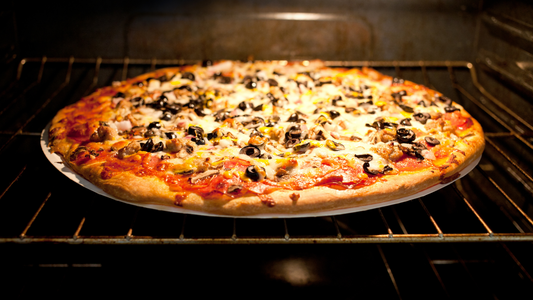
The Pizza and Drinks Bundle at £1,399.99 as listed is the one we point café operators towards most often. It pairs a twin deck pizza oven with a double door bottle cooler and a three-door refrigerated prep counter — which sounds like pizzeria kit until you look at how a café actually trades. The prep counter is your sandwich station. The bottle cooler is your soft drinks and grab-and-go chiller. The oven turns an 11am coffee shop into a 6pm evening offer without a second fit-out.
Matched units share footprints, voltages and worktop heights. One delivery, one warranty conversation, one point of contact. See the full range on our bundles collection.
Natasha's Law and what it means for your counter
This is the one that catches cafés out, and it's worth reading twice.
Natasha's Law covers PPDS — food that is pre-packed for direct sale. In plain terms: anything you wrap, box or bag on your premises and then put out for a customer to pick up themselves. Grab-and-go sandwiches. Boxed salads. Cling-filmed cake slices. Wrapped flapjacks by the till.
Every one of those needs a full ingredients list on the label, with the 14 regulated allergens emphasised within it. Not a sticker saying "contains nuts". The full list.
Here's the part operators miss: this is a process, not a purchase. You'll need a labelling setup, yes. But labels are only as accurate as the recipe records behind them, and those records have to change every time a supplier reformulates a bread mix or you swap a mayonnaise. Version-controlled recipe specifications, a routine for checking supplier declarations, and a trained member of staff who owns it. Buy the printer by all means. The system is what keeps you compliant.
Two more things. Your FHRS score is disproportionately load-bearing for a café — you're a footfall business, the sticker goes in the window, and people photograph it. And separate hand-wash basin provision is non-negotiable: a sink used for food prep or washing up does not count, whatever the previous tenant left behind.
Seven mistakes we see in new cafés
- Sizing the espresso machine to today's trade rather than year two. Upgrading a 2-group to a 3-group later means new plumbing, new electrics and a closed day.
- Spending heavily on the machine and cheaply on the grinder. The grind sets the ceiling. Always has.
- Treating the display case as storage rather than merchandising. Bad lighting and eye-level gaps cost you the highest-margin sales in the building.
- Buying a pop-up toaster for a breakfast offer. It works fine for six weeks, then you hit a proper Saturday.
- No water treatment on the coffee machine. UK water scales boilers, and limescale voids more coffee machine warranties than any other single cause.
- Leaving allergen labelling until the week before opening. Natasha's Law needs recipe records built as you write the menu, not retrofitted the night before.
- Under-specifying warewashing. A glasswasher struggling with lunch plates will hold up your entire afternoon, every afternoon, for as long as you own it.
When to bring in a Key Account Manager
If your list runs past about eight items, or the unit has anything awkward about it — a narrow doorway, a first-floor kitchen, a supply you're unsure of — stop shopping and start talking. That's what our Key Account Managers are for, and there's no charge for the conversation.
The mistake isn't buying the wrong espresso machine — it's buying any of it before anyone's measured the counter run. Twenty minutes with a tape measure and your water report beats a phone call three weeks later about a two-group that fits the space but not the doorway, and a softener nobody costed.
We work with independents across Bristol, Brighton, Manchester, Leeds and Cardiff, and the pattern is consistent: the sites that go well are the ones where somebody measured the doorway first. You can find the team on our meet the team page.
Frequently asked questions
What equipment do I need to open a café in the UK?
Seven essentials: an espresso machine and grinder, display refrigeration (chilled and ambient), undercounter fridge and freezer, a panini or contact grill, a conveyor toaster, a prep counter, and a glasswasher or small dishwasher. Everything beyond that depends on your food offer.
How much does it cost to equip a café?
Budget £8,000–£12,000 at entry level, £15,000–£25,000 for a typical independent, and £30,000–£50,000 for all-day brunch or an in-house bakery. Those figures are equipment only, ex VAT, and exclude installation, extraction, shopfitting and stock.
Do I need a 2-group or 3-group espresso machine?
A 2-group handles roughly 150–200 drinks across a morning peak. If your realistic peak-hour projection exceeds about 120 drinks, or you expect growth, specify three groups. It is the hardest ceiling in the business to move once you've installed it.
Does Natasha's Law apply to my café?
Yes, if you pre-pack any food on site for direct sale — wrapped sandwiches, boxed salads, cling-filmed cakes. Each item needs a full ingredients list with the 14 allergens emphasised. Food made to order at the counter is not PPDS.
Do I need a water softener for a café coffee machine?
In most of the UK, yes. Hard water scales espresso boilers quickly, degrades extraction quality, and limescale damage is excluded from the majority of manufacturer warranties. Filtration or softening is far cheaper than a descale, and cheaper still than a replacement boiler.
Can I lease café equipment in the UK?
Yes. Leasing typically requires 18+ months trading, homeowner status and a good credit history, and interest-free instalment options are available on qualifying orders. Full details and current terms are on our finance options page.
Where to go next
If you take one thing from this: decide the espresso machine first, spend properly on the grinder, and keep your equipment budget separate in your head from your fit-out budget. The rest of the list is solvable.
- Shop the café range — equipment for bistros and cafés
- Compare venue types — the full commercial catering equipment guide
- Cost it out properly — what it costs to open a café
- Different format in mind? — opening a takeaway or opening a pub
Come and talk to us before you buy. Twenty minutes on the phone has saved more café openings than any checklist ever written, including this one.
— Andrew
Prices and product availability are correct as of 9 August 2026 and subject to change. All prices stated ex VAT unless described as "as listed". Bundle prices are as listed on site. Cost bands are equipment only and exclude installation, services, extraction and fit-out. Please confirm current pricing and specifications before ordering.
This article is general guidance and not legal, financial or regulatory advice. Requirements under food safety, allergen and licensing legislation vary by circumstance and local authority. Please take independent professional advice, and speak to your local environmental health team, before making business decisions.