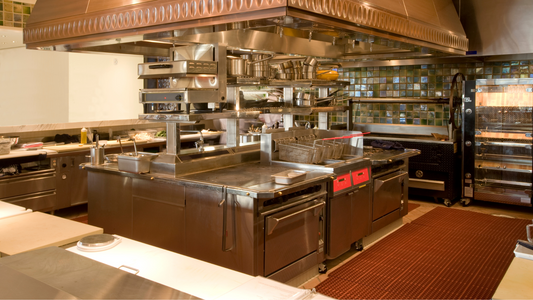
Quarter to seven in the morning, in a hotel kitchen just off the Royal Mile in Edinburgh. The pass is empty and clean. The head chef is looking at the rooms sheet — 112 occupied, so call it 180 breakfasts — and doing the sum everybody in that room already knows the answer to. Between 7.30 and 9.00, nearly all of those people come downstairs. Not a trickle. All of them, more or less at once.
That ninety minutes is why hotel kitchen equipment gets specified differently from every other kind of commercial kitchen. It isn't that the food is harder. Breakfast is not hard food. It's concurrency — a volume of covers landing in a compressed window, then a long flat middle, then a completely different evening service, with room service running underneath it all at two in the morning.
Over thirty years in this trade, I've watched a lot of hotels buy a kitchen designed for the dinner they imagine rather than the breakfast they'll actually serve. It's the most expensive mistake in the sector.
So this is the checklist. What goes in, why, and what it costs excluding VAT. For the wider view, start with our framework for choosing catering equipment by venue type.
— Andrew Pickersgill, Managing Director, eCatering
Two peaks, one kitchen: the hotel problem nobody warns you about
A restaurant has one peak. Demanding, but one shape, and you can build a kitchen around it. A hotel has two that behave nothing alike, plus a tail that never ends.
Breakfast is a wall. Occupancy dictates it, not marketing. At 80% full on a Tuesday in February you'll serve roughly 80% of those guests inside ninety minutes, and no promotion, booking system or clever menu spreads it out. In throughput terms it's closer to a school canteen than a restaurant.
Dinner is the opposite. Bookings arrive across two and a half hours, tables turn, the kitchen gets recovery time between tickets. Spread, not compressed.
Then room service — above three stars, usually a 24-hour offer. Two covers at 11pm. One club sandwich at 3am. Individually trivial, collectively the reason your kitchen never shuts down.
Here's the trap. Almost every operator specs around dinner, because dinner is the bit with the margin and the chef's ego attached to it. Then breakfast arrives on day one and the toaster becomes the bottleneck for the whole business. Guests don't review your tasting menu on Tripadvisor. They review the twenty-minute wait for scrambled eggs.
Specify for breakfast concurrency first. Dinner will fit inside it. It does not work the other way round.
Why redundancy matters more than raw capacity
A restaurant that loses its main oven on a Tuesday can call the engineer and take the oven dishes off tonight's menu.
A hotel cannot. You've already sold the room, and breakfast came with it. Your guests are asleep upstairs, contractually entitled to be fed in the morning, and there's no version of "the oven's broken" that doesn't end in refunds.
Hence the rule I'd write on the wall of every hotel kitchen project: two mid-size units beat one large one. Two 6-grid combis rather than one 10-grid. A backup convection oven in the corner, earning nothing on a normal week and saving the operation on a bad one.
The maths looks uncomfortable on the purchase order — two mid-size units cost a little more and eat more floor space. Then run the other number. What does a failed breakfast cost across 112 rooms in refunds, comps and review damage?
Which is why a modest secondary oven is such a sensible line. A Quattro Titanium 108L Convection Oven (OVC005) at £562.49 ex VAT isn't your hero. It's there so that when the combi faults at 6am, breakfast still happens.
The breakfast line: equipment for the 90-minute compressed rush
Breakfast is a production line and should be specced like one. Every item below works against the clock.
- Toasting. A conveyor toaster, not a pop-up. Pop-ups are a queue with a heating element attached. Conveyor units rated at 150 or 450 slices per hour give you a throughput you can plan against, and 450/hr isn't overkill at 180 covers.
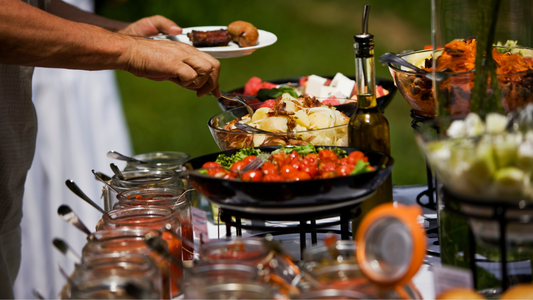
- Hot holding. Bain-maries and heated gastronorm wells for eggs, beans, mushrooms, tomatoes — replenished in small batches, never one enormous tray that's sat since 7.15.
- Coffee. The item guests judge hardest. Bean-to-cup for volume and consistency; traditional espresso if your positioning demands it and you've someone to run it.
- Juice. Chilled dispensers on the buffet, plus fridge space behind for the backup.
- Live cooking. Crepe and waffle plates, or an egg station. Double duty — a quality signal, and they spread the queue by giving guests something to wait at rather than wait for.
- Refrigerated display for the continental side: yoghurts, charcuterie, fruit, pastries.
One thing people miss. Buffet refrigeration and back-of-house refrigeration are separate problems, and undersizing the display fridge means somebody running to the walk-in every four minutes during your busiest hour. Our commercial fridges range covers both.
And ice. Bar, restaurant, room service buckets, banqueting — hotels burn through it. A Contender Ice Machine at 85kg/24hr is £1,385.73 ex VAT, which for a hotel is a working minimum rather than a generous one.
The main kitchen: combi ovens and regeneration
The instinct at hotel volumes is to buy a bigger conventional line. More burners, more oven decks, a longer suite. It feels proportionate. It's usually wrong.
What a hotel needs is combi ovens plus regeneration capacity, because combi steam does three hotel jobs at once: it batch-cooks breakfast to a consistent standard, it regenerates prepared food for banqueting without drying it out, and it handles à la carte dinner with far less chef time per cover than an open line.
A premium reference point — a Rational iCombi Pro 6-1/1 sits at roughly £6,500–£8,500 ex VAT. Serious money, and at mid-market and above generally the right call. Below that, convection units from our commercial ovens range cover the secondary and backup roles.
Regeneration is what makes banqueting viable at all. A hundred-cover wedding cannot be cooked to order. It's produced ahead, chilled or held, regenerated in racks and moved to the function room in heated trolleys — which is why hot holding and mobile trolleys sit on the must-have list alongside the ovens.
The rest of the suite — range, griddle, fryer, chargrill — still earns its place for dinner and room service. Just size it to dinner, which is spread, rather than to breakfast, which the combis already handle.
Ask yourself this before you sign anything: at 8.15 on your busiest morning, what is everyone waiting for? Buy a second one of that.
Warewashing at hotel scale
Warewashing quietly decides whether a hotel kitchen copes, and it's the section most often under-specced, because nobody gets excited about a dishwasher.
Do the maths honestly. 180 breakfast covers means 180 plates, 180 cups and saucers, 180 glasses, plus cutlery and service ware — call it 600 to 700 items, coming back in the same window you're plating in. Then dinner. Then banqueting, where 100 covers across three courses is 300 plates on its own.
An undercounter machine cannot do this. It isn't a matter of trying harder.
You want a pass-through hood machine as the minimum, stepping up to a rack conveyor at banqueting scale. A pass-through runs two-to-three minute cycles — around 30 racks an hour once you allow for loading — worked as a two-person station, one loading, one unloading. The Contender Pass-Through Hood Dishwasher (DMH017) is £1,691.47 ex VAT in the three-phase version. Note the three-phase part. Check your supply before you order.
Keep bar glasswashing on a separate machine, too — glassware coming back at 11pm has nothing to do with the kitchen's rhythm. And put a chemical programme behind it from day one, because the machine is only half the result: auto-dosed detergent, a separate rinse aid, and a descaler cycle if your water's hard.
The three tiers: what a hotel kitchen actually costs
Every figure below is equipment only, excluding VAT, and excludes installation, extraction ducting, gas and electrical work, plumbing, commissioning and fit-out. Equipment is typically 40–50% of a kitchen project — so a £60,000 schedule means a project closer to £120,000.
- Entry — small B&B or boutique, 20–40 breakfast covers: £25,000–£40,000 ex VAT, equipment only. One combi or a good convection oven, compact cooking line, upright and undercounter refrigeration, a hood dishwasher, one ice machine, a proper breakfast line. Room service limited or absent. This tier leans on our Quattro budget range for prep tables, sinks and bain-maries.
- Mid — 80–150 rooms with restaurant and bar: £50,000–£90,000 ex VAT, equipment only. Two combis rather than one. Walk-in or high-capacity refrigeration. Full cooking suite. Pass-through warewashing plus separate bar glasswashing. High-output ice. Back bar refrigeration. Some banqueting hot holding. This is Contender territory for the working kit, with a premium combi as the centrepiece.
- Premium — banqueting, conferencing, multiple outlets: £120,000–£250,000+ ex VAT, equipment only. Multiple combi banks, blast chilling, rack conveyor warewashing, regeneration trolleys, dedicated pastry and larder sections, separate kit per outlet. Here the extraction and services bill frequently exceeds the equipment bill.
Country-house hotels? Mid-tier on covers, premium on complexity. A Lake District property with 40 rooms, two rosettes and a wedding licence has the needs of a much larger hotel, because the banqueting is the business. See how the categories break down on our hotel equipment pages.
Bundles built for hotels
You don't have to start from a blank page. Two of our bundles are built for exactly this two-peak split.
The Continental Breakfast Bundle at £1,999.99 as listed covers the guest-facing morning kit — coffee machine, toaster, crepe maker and juice dispenser, in one delivery.
The Evening Service Bundle at £1,149.99 as listed pairs a Contender triple-door bottle cooler and twin deck pizza oven with Quattro prep tables, which suits a bar-food or informal dining offer alongside the main restaurant.
The case isn't only price, though bundle pricing sits below the sum of the parts. Matched units share footprints, voltages and worktop heights, they arrive on one delivery against one lead time, and there's one warranty route when something goes wrong. Browse the full equipment bundles collection.
Compliance across a 24-hour operation
Running around the clock changes your compliance burden in ways a single-service restaurant never encounters.
HACCP across shifts and handovers. Temperature records, cooling logs and cleaning schedules have to survive three shift changes a day. The failure mode isn't bad practice — it's the 2am gap where nobody signed anything because nobody was sure whose job it was.
Food Information Regulations on room service and banqueting. Allergen information must be available where the guest orders — in-room directory, room service script, banqueting function sheet, not just the restaurant menu. Menus agreed six months ahead still need current allergen data on the night.
TR19 grease extraction cleaning. Hotels sit high on insurer risk registers, because a kitchen fire sits directly beneath sleeping accommodation. Cleaning frequency should be evidenced, dated and filed.
Fire compartmentation between kitchen and guest accommodation. Building fabric rather than equipment, but it constrains where the kitchen and its ductwork can go — so it belongs in the conversation before the layout is fixed.
Legionella and water hygiene. Ice and beverage machines running continuously on a supply that may sit stagnant in low season are a real risk. Put them on the water safety plan.
Seven mistakes we see in hotel kitchens
- Speccing for dinner and discovering breakfast on day one. The most common and the most expensive. Breakfast concurrency is the harder problem. Solve it first.
- One large unit instead of two mid-size ones. Cheaper on paper, catastrophic on the morning the compressor goes.
- Undersizing warewashing. An undercounter machine behind 180 breakfasts plus dinner plus banqueting is a permanent, unfixable bottleneck.
- Forgetting the ice. Bar, restaurant, room service and functions all draw on it. 85kg per 24 hours is a working minimum for a mid-size hotel.
- Buying banqueting ovens without banqueting trolleys. Regeneration is only useful if you can get the food to the function room hot. The trolleys are not an accessory.
- No plan for room service between midnight and 6am. A skeleton night offer still needs holding equipment, a safe reheat route and temperature records. Winging it fails the audit.
- Treating cleaning as a consumable rather than a system. In a 24-hour kitchen with three handovers, hygiene is a process with named owners and evidence — not a cupboard with some spray in it. Write it down, name the owner per shift, and keep the records where an inspector can find them.
When to bring in a Key Account Manager
Hotel projects are where a site visit stops being a nicety and starts saving the budget. Room count, breakfast covers, banqueting ambitions and the incoming electrical supply interact in ways a spreadsheet rarely captures.
Hotels are the one job we won't quote off a plan alone. Two properties with the same room count in Glasgow can need completely different kitchens, because one does 90 weddings a year and the other does none. We'd rather spend an afternoon in Edinburgh or up in the Lakes walking the room and looking at the incoming supply than sort out a three-phase problem after the combi's been delivered.
Our Key Account Managers cover the whole of the UK face-to-face, and it costs nothing to have one walk the room before you commit. Meet the team if you'd rather see who you'd be dealing with.
Frequently asked questions
What equipment does a hotel kitchen need?
A hotel kitchen needs eight core categories: combi oven or ovens, a full cooking suite, walk-in or high-capacity refrigeration, a pass-through or rack dishwasher, high-output ice, a dedicated breakfast line, banqueting hot holding and trolleys, and bar refrigeration.
The breakfast line is what distinguishes hotels from restaurants — conveyor toaster, coffee, juice dispensers, hot holding, often crepe or waffle plates. Room service and banqueting drive the regeneration requirement on top.
How much does it cost to equip a hotel kitchen in the UK?
Budget £25,000–£40,000 ex VAT for a small B&B or boutique doing 20–40 breakfast covers, £50,000–£90,000 ex VAT for an 80–150 room hotel with restaurant and bar, and £120,000–£250,000+ ex VAT for banqueting and multi-outlet properties. Equipment only.
Those figures exclude installation, extraction, services and fit-out. Equipment is typically 40–50% of a kitchen project, so double the schedule for a realistic budget.
How many combi ovens does a hotel kitchen need?
Most hotels above around 80 rooms should plan for two combi ovens rather than one, sized mid-range rather than one large unit. Redundancy matters more than raw capacity, because breakfast cannot be cancelled when a single oven fails.
Small boutique properties can run one combi with a convection oven as backup. Banqueting operations need multiple units plus regeneration racks and heated trolleys.
What dishwasher do I need for a hotel?
A pass-through hood dishwasher is the practical minimum for any hotel serving breakfast plus dinner. A three-phase Contender pass-through hood machine costs £1,691.47 ex VAT and runs two-to-three minute cycles, around 30 racks an hour with two people on the station.
Larger banqueting operations should step up to a rack conveyor. Keep bar glasswashing separate so late-night glassware doesn't compete with the kitchen.
How do I plan a hotel breakfast service?
Start from occupancy, not bookings. Multiply room count by expected occupancy and average guests per room, then assume nearly all arrive inside a 90-minute window. That number, not your dinner covers, sizes your toaster, hot holding and coffee.
Then spread the queue physically — a live egg, crepe or waffle station gives guests somewhere to stand that isn't the buffet. Batch-replenish in small quantities rather than filling large trays that sit.
Can I lease hotel kitchen equipment?
Yes. eCatering offers iwocaPay on orders from £150 to £30,000, interest-free, paid immediately or across three equal monthly instalments. Lease finance is also available and typically requires 18-plus months trading, homeowner status and a good credit history.
PayPal Credit gives four months interest-free on orders over £99. Most operators blend the two: buy long-life items like stainless furniture outright, finance the cooking and warewashing. Full details on finance and payment options.
Where to go next
Work in this order: breakfast concurrency, then redundancy, then warewashing, then dinner. The rest follows.
- Browse full kitchen solutions for large-scale hospitality by category and outlet.
- Read the wider venue-by-venue commercial catering equipment framework if you're running more than one site.
- Opening a standalone restaurant alongside the hotel? Work through the restaurant equipment checklist.
- Running care or residential catering too? Our care home kitchen equipment guide covers regeneration and texture modification.
Thirty-odd years in, the hotels that run well are almost never the ones with the most impressive kit. They're the ones where somebody worked out early what 6.45am looks like at full occupancy, and bought for that.
Start with breakfast. Build in the redundancy. Everything else is detail.
— Andrew
Prices shown excluding VAT as of 9 August 2026 and are subject to change. Bundle prices are as listed on site. Cost bands cover equipment only and exclude installation, extraction ducting, services and fit-out. Always check product specifications to ensure equipment meets your kitchen's requirements.
This article is for informational purposes. Business, regulatory and finance decisions should account for your specific circumstances, local regulations, and professional advice where appropriate.