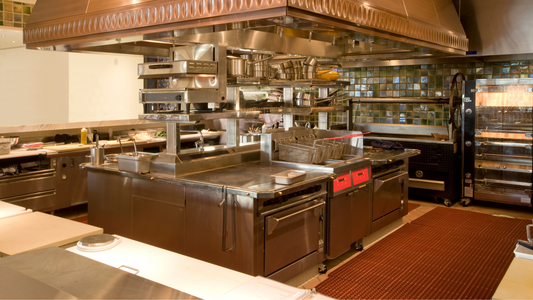
The unit is empty. Bare screed floor, one cold tap, a fuse board that nobody has looked at properly, and a lease that says you're trading in four weeks. I've stood in that room more times than I can count, usually with someone holding a phone full of screenshots and a takeaway equipment list UK forums told them was definitive.
It never is. Not because the lists are wrong, but because they're written as shopping lists when what you need is a sequence — what goes in first, what dictates everything else, and what can wait until month six once the money's coming in.
Takeaways are the most unforgiving venue type we supply. Small rooms, brutal peaks, thin margins, and a delivery platform grading your hygiene in public. Get the fryer line wrong and no amount of clever menu work rescues it.
So here's the checklist in the order that matters, with real UK prices excluding VAT. For the broader picture across all venue types, our framework for choosing catering equipment by venue sits behind this one.
— Andrew Pickersgill, Managing Director, eCatering
Fryers first: capacity, recovery and how many oil pots
Everything else in a takeaway is negotiable. This isn't.
The instinct is to buy one big fryer, because one big number looks like more capacity than two smaller ones. It usually isn't, and here's why it matters twice over.
The allergen argument. One pot means fish, chicken, chips, vegan items and anything battered are all sharing the same oil. That isn't a technicality you can label your way out of — cross-contact in shared oil is real, it's the single most common thing an EHO picks up in a small takeaway, and if you're selling to anyone managing a coeliac or fish allergy you have nothing to tell them. A dedicated pot solves it for the price of a decent phone.
The recovery argument. Recovery is how fast oil climbs back to temperature after a basket goes in. Drop 2kg of frozen chips into one large pot at 7pm on a Friday and the temperature falls off a cliff; everything after it cooks slower, greasier and paler. Two smaller pots share that thermal shock instead of concentrating it.
Which is the whole answer, really. Two pots almost always beat one, for less money.
At entry level the Quattro FCE008 twin countertop fryer at £189.99 ex VAT gives you two independent tanks on the counter. Then add a Quattro FCE004 13L single fryer at £114.81 ex VAT as a dedicated allergen pot — ring-fenced, labelled, never used for anything else. That's under £310 ex VAT for a compliant three-pot line, which is why we point most new openings at the Quattro entry-level range before anything heavier. Compare formats across our commercial fryers.
Match the cooking line to your concept
After frying, your second cooking appliance is decided entirely by what you're selling. Not by what looks impressive.
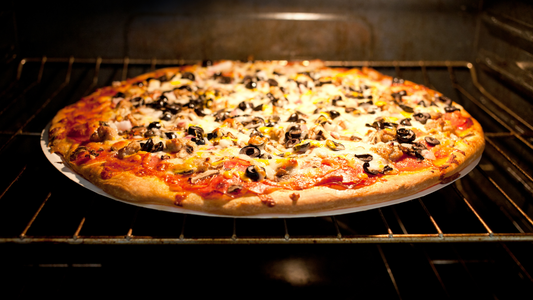
Pizza-led. A twin deck earns its money on throughput, not peak temperature. The Contender Twin Deck Pizza Oven (OVP012), single-phase, 12 × 13", runs at £1,261.15 ex VAT and will turn 50–60 pizzas an hour in steady service. Single-phase matters more than people expect — it means you can often open without a supply upgrade. More formats across our commercial pizza ovens.
Kebab-led. The KINN 4 Burner Electric Kebab Grill and a decent knife slicer. KINN is our premium own-brand, and the range runs three and four-burner grills in gas and electric from £641.64 to £1,008.33 ex VAT, all on a 2-year parts and labour warranty extendable to five. Zoned burners are the point: you're not heating the whole face for one skewer at 2am.
Chicken-led. This is where a pressure fryer changes the maths. The Contender FCE091 16L Pressure Chicken Fryer at £591.66 ex VAT cooks around 8 portions per 4-minute cycle at 165°C — call it 120 portions an hour from one unit, in a footprint smaller than a wheelie bin. For a chicken shop doing volume, nothing else comes close on cost per portion.
Fish and chip shop equipment is its own conversation — most chippies run a purpose-built frying range rather than modular fryers, which is a specification job, not a checklist item.
The pattern across all four: Contender does the hero cooking, Quattro fills in around it. That's how the takeaway equipment ranges on our site are built, and it's not an accident.
Hot holding and the delivery problem
Here's the thing nobody tells you about delivery platforms. Your food doesn't get eaten when it's cooked. It gets eaten twenty-five minutes later, in a paper bag, in a car.
Heated display and hot holding exist to bridge that gap without cooking the food a second time. A gantry or heated display over the pass keeps chips, wings and sides at safe service temperature — above 63°C — for the twenty to forty minutes between the rider accepting the job and the customer opening the box.
But hold times aren't universal. Battered fish goes soft inside ten minutes. Chips hold acceptably for fifteen under proper radiant heat, poorly under a lamp. Fried chicken on the bone holds well for thirty. Anything sauced holds terribly — sauce on the side, always.
Which is a menu decision as much as an equipment one. If half your menu can't survive a twenty-minute ride, the problem isn't your holding kit. Size the display to your peak order rate, too: a shop doing 40 orders in a two-hour Friday window needs far more holding surface than one doing 80 spread across the day.
Refrigeration: chest freezer plus prep line
Takeaway refrigeration splits in two, and the mistake is buying one type to do both jobs.
Stock hold. Frozen bulk — chips, chicken, fish, dough balls. A Contender FZC020 485L chest freezer at £419.78 ex VAT holds a week of frozen stock for a small-to-mid shop and costs less to run than an upright of the same volume (cold air doesn't fall out every time you open a lid). Put it in the back, not the service line. More options in commercial freezers.
Service line. Undercounter refrigeration and a refrigerated prep counter, sitting within arm's reach of the fryers, holding one shift's worth of prepped product at 0–5°C. Nobody should be walking to the back mid-service.
Get that split right and your staff stop crossing the room forty times an hour. Get it wrong and you've built a takeaway that runs on footsteps.
Extraction is not optional
This is the line item that ruins budgets, and it ruins them late — usually after the kit's been bought.
Any takeaway with fryers needs a proper canopy, filters, ductwork to atmosphere and make-up air. The benchmark is DW172, the BESA Specification for Kitchen Ventilation Systems, and it's what Environmental Health, your insurer and any half-decent consultant assess you against. Budget £2,500–£6,000 for a bespoke canopy on a small-to-mid site, before ducting.
Run gas fryers and you also need a BS 6173 gas interlock — gas will not flow unless extraction is proven running. A hard requirement, not a preference, and it adds cost and commissioning time.
So why do so many people miss it? Because extraction isn't on the equipment list. It's on the building — and the building is the landlord's problem right up until the moment it becomes yours.
Ask two questions before you sign anything. Is there an existing duct route to atmosphere? Does the lease or planning permission allow a flue? If either answer is no, the cheapest unit on the market just became the most expensive.
The three tiers: what a takeaway setup actually costs
All three bands below are equipment only, excluding VAT. They exclude installation, extraction ducting, services, shopfitting and signage. That distinction is where most opening budgets fall apart.
- Entry: around £6,000–£10,000. Quattro-led. Countertop fryers, basic heated display, chest freezer, undercounter fridge, stainless prep tables and sinks, one modest cooking appliance. A real tradeable kitchen for a tight menu in a small unit — not a compromise.
- Mid: around £12,000–£20,000. Contender-led. Twin or floor-standing fryers, a twin deck pizza oven or pressure fryer, refrigerated prep counter, proper heated gantry, undercounter dishwasher. Where most Bolton and Birmingham high street openings land.
- Premium: £25,000–£40,000 and up. Multi-pot fryer banks, a full cooking line, high-capacity refrigeration, redundancy on the critical units, properly specified extraction.
For the full picture including rent, fit-out, licensing and working capital, read our companion piece on what it costs to open a takeaway in the UK. Equipment is roughly 40–50% of total fit-out spend, so if the kit quote is £15,000, the project is closer to £30,000.
Bundles built for takeaways
Buying piecemeal means five suppliers, five lead times, and an opening date set by the slowest one.
The Takeaway Kitchen is priced at £2,199.99 as listed and covers the concept-defining kit in one consignment: a Contender Twin Deck Pizza Oven (8 × 13", single-phase), a Contender Super Cut 2 Kebab Knife Slicer, a Contender 45cm Dough Roller and Pizza Former, and a KINN 4 Burner Electric Kebab Grill. Matched units, one delivery slot, one warranty route, one number to ring. Then bolt your fryer line and refrigeration on around it. Full range on our equipment bundles.
Your FHRS rating is a revenue line
Most operators treat the Food Hygiene Rating Scheme as a compliance chore. In a takeaway it's a revenue line.
Deliveroo, Uber Eats and Just Eat all set a minimum hygiene rating for listing. Fall below it and you don't get a warning letter — you get delisted, and for a delivery-led takeaway that can be most of your turnover gone overnight, with a re-inspection queue measured in months. There is no marketing budget that fixes a 1.
Three things drive the score in a takeaway specifically:
Allergen separation. Dedicated fryer oil, separate utensils, colour-coded boards, a written matrix your staff can actually find. Design it in on day one — retrofitting a separate prep zone costs roughly three times what building it in does.
Waste oil disposal. A registered waste carrier, a sealed container, documentation for every collection. Pouring it down a drain is a criminal offence and a blocked-sewer bill you don't want.
Documented cleaning. Not a cupboard with some spray in it. A schedule, the right chemistry for each surface, and records. Specify kit that strips down without tools while you're at it — one reason we point kebab operators at the KINN grills, where the fat trays and burner guards come out in seconds at close.
Scores are earned in week one, not month six.
Seven mistakes we see in new takeaways
- One fryer pot. Covered above, and still the most common. An allergen problem and a Friday-night recovery problem in a single purchase.
- Buying kit before checking the supply. Three-phase upgrades run £1,500–£4,000 where capacity exists and lead times run to months. The distribution network operator does not care that your oven has arrived.
- Leaving extraction out of the budget. The canopy routinely costs more than the cooker.
- Sizing for daily total instead of peak hour. A takeaway's whole economy happens in about six hours a week.
- Domestic appliances in the back. An EHO will fail them and your insurer may decline a claim.
- No hand-wash basin separate from the food sinks. Small item, instant deduction on inspection, awkward to add later.
- Ignoring engineer response times. A cheap fryer with a ten-day service SLA isn't cheap. It's ten days of closed doors.
When to bring in a Key Account Manager
Some projects want a website. Some want somebody in the room with a tape measure. A takeaway fit-out is usually the second one — small rooms, awkward doorways and existing services make paper plans unreliable. Our Key Account Managers cover the whole UK face to face, from Bolton to Birmingham to Cardiff, and there's no charge for a site visit.
The mistake isn't buying the wrong fryer — it's buying any fryer before anyone's looked at the room. We'd rather have twenty minutes on site in Bolton or Cardiff before you spend a penny than a phone call three weeks after the kit's landed and it won't fit through the door.
Bring one in when the layout is fixed but the spec isn't, or when the total heads past £10,000. You can meet the team here, and it's worth checking what interest-free credit and lease finance does to your opening cashflow first.
Frequently asked questions
What equipment do I need to open a takeaway in the UK?
Seven categories: fryers with multiple oil pots, hot holding or heated display, a concept-specific cooking appliance such as a pizza oven or kebab grill, chest and undercounter refrigeration, a prep counter, an extraction canopy, and packaging and consumables.
Beyond that, the exact spec depends on your menu and your peak hour. A chicken shop and a pizza shop share refrigeration and extraction but almost nothing else in the cooking line.
How much does it cost to equip a takeaway?
Budget around £6,000–£10,000 for an entry-level setup, £12,000–£20,000 for a mid-range one, and £25,000–£40,000-plus at premium. All figures are equipment only, excluding VAT, installation, extraction ducting and fit-out.
Equipment typically accounts for 40–50% of total project spend, so double the equipment figure for a realistic opening budget.
How many fryers does a takeaway need?
Most takeaways need at least two independent oil pots, and three if you sell fish, chicken and vegan items alongside chips. Two smaller pots beat one large pot on both allergen separation and temperature recovery during peak service.
A twin countertop unit plus one dedicated single-tank fryer covers most small shops for under £310 ex VAT.
Do I need a separate fryer for allergens?
If you sell fish, gluten-containing batter and items marketed as vegan or gluten-free, yes — shared oil carries allergen cross-contact and you cannot label your way around it. A dedicated 13L single-tank fryer starts at £114.81 ex VAT.
Ring-fence it, label it clearly, and make sure every member of staff knows which pot is which.
What FHRS rating do delivery platforms require?
Deliveroo, Uber Eats and Just Eat each set a minimum Food Hygiene Rating Scheme score for listing, and falling below it results in removal from the platform rather than a warning. Check each platform's current published threshold before you launch.
For a delivery-led takeaway that makes your FHRS score a direct revenue line, not a back-office formality. Re-inspection can take months.
Do I need three-phase electricity for a takeaway?
Often not. Many takeaways run entirely single-phase — countertop fryers, single-phase twin deck pizza ovens and undercounter refrigeration all work on standard supply. Three-phase becomes necessary for large fryer banks, combi ovens and heavy-duty mixers.
Check the incoming supply before you sign the lease. A connection upgrade costs roughly £1,500–£4,000 where network capacity exists, more where excavation is needed.
Where to go next
Four weeks to open, and a sequence to work through.
- Start with the fryer line — two pots minimum, one of them ring-fenced for allergens.
- Price the concept appliance against your actual menu, not your ambitions.
- Confirm the extraction route and the incoming supply before anything is ordered.
- Then look at everything built for high-output takeaway service and pick the bundle that matches your concept.
Opening something else? We've written the same checklist for opening a café and for opening a pub kitchen. And for the framework across all seven venue types, go back to our guide to what catering equipment you actually need.
Thirty-plus years in, the takeaways that last are rarely the ones with the shiniest kit. They're the ones where somebody thought about the fryer line properly before the walls went in. Do that bit right and the rest follows.
— Andrew
Prices shown excluding VAT as of 9 August 2026 and are subject to change. Bundle prices are as listed on site. Cost bands cover equipment only and exclude installation, extraction, services and fit-out. Always check product specifications to ensure equipment meets your kitchen's requirements.
This article is for informational purposes. Business, regulatory and finance decisions should account for your specific circumstances, local regulations, and professional advice where appropriate.