Your oven does more work than any other piece of equipment in your kitchen. It's on from the moment prep starts until the last plate goes out. So when it's time to buy one - or replace one that's not keeping up - the decision matters more than most people give it credit for.
The problem is there's no single "best" commercial oven. What works brilliantly for a high-volume bakery would be completely wrong for a small bistro. A pizzeria has different needs from a pub kitchen. And the oven that's perfect at 50 covers a night might struggle at 120.
We supply commercial ovens to kitchens across the UK - from small cafes to busy hotel kitchens - and the same questions come up every time. This commercial oven guide walks you through the main types, what each one does well (and doesn't), how to size them for your operation, what they actually cost, and the installation requirements that can catch you out if you don't plan ahead.
The Main Types of Commercial Oven
Before you look at brands or prices, you need to understand what type of oven suits your operation. Each type cooks differently, and the right choice depends on your menu, your volume, and your space.
Convection Ovens
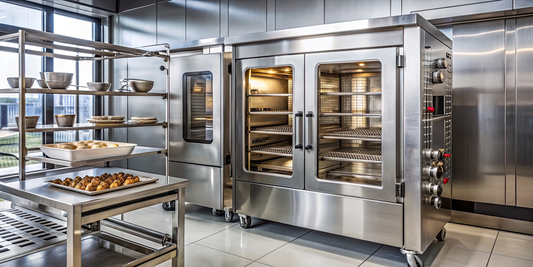
The standard workhorse in most commercial kitchens. A fan circulates hot air around the oven cavity, which means more even heat distribution and faster cooking times than a conventional (static) oven.
What they're good at:
-
Baking pastries, pies, and bread rolls
-
Roasting meat and vegetables in bulk
-
Reheating and regenerating pre-prepared food
-
Any operation where you're cooking large batches of similar items
What they're less suited to:
-
Delicate items that can dry out in moving air (some cakes, souffles)
-
Artisan bread that needs a crispy crust and steam injection
Cost range: £1,000-£5,000 for a quality commercial convection oven. Countertop models sit at the lower end; full-size floor-standing units at the higher end.
Convection ovens are the right starting point for most restaurant kitchens. They're relatively affordable, straightforward to operate, and handle a wide range of cooking tasks. If you're on a tight budget and need one oven to do most things reasonably well, this is where to start.
Combi Ovens
If you could only have one piece of cooking equipment in your kitchen, many chefs would pick a combi oven. They combine three cooking modes in a single unit: convection (dry heat), steam, and a combination of both.
What they're good at:
-
Pretty much everything. Roasting, steaming, baking, braising, poaching, grilling, regenerating.
-
Retaining moisture - combi ovens can reduce meat shrinkage by up to 20% compared to conventional cooking, which means better yield from your ingredients.
-
Cooking different items simultaneously without flavour transfer (in steam mode).
-
Speed - they cook roughly 20% faster than standard convection ovens.
What they're less suited to:
-
Kitchens with a very narrow menu that doesn't need the versatility.
-
Very tight budgets - the upfront cost is significantly higher.
Cost range: £2,000-£15,000+ depending on size and brand. A 6-tray unit from a mid-range brand like Gastrotek starts around £2,000-£3,500. Premium brands like Rational and Unox start from around £5,000 for smaller models and run up to £17,000+ for larger, fully featured units.
The running costs are often lower too. Because combi ovens cook faster and more efficiently, and because a single combi replaces two or three separate pieces of equipment (convection oven, steamer, holding cabinet), the total cost of ownership can work in your favour even though the purchase price is higher.
One thing to know: combi ovens use water, which means they need a water supply connection and drain. They also need regular descaling, especially in hard water areas - something that catches people out. Factor in water softener costs if you're in a hard water region.
Deck Ovens
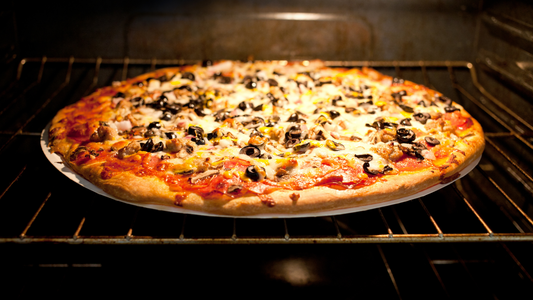
Deck ovens use conduction heat - the food sits directly on a heated stone or steel deck, and heat radiates from below (and sometimes above). They're the traditional choice for baking bread and pizza.
What they're good at:
-
Pizza. A stone deck oven is still the gold standard for getting a properly crispy base.
-
Artisan bread - the direct contact with a hot stone creates the crust that convection ovens can't replicate.
-
Anything where bottom heat and a crispy base matter.
What they're less suited to:
-
Speed. Deck ovens take longer to heat up and are slower per batch than convection or combi ovens.
-
Versatility. They do a few things exceptionally well, but they're not general-purpose workhorses.
-
Staff need to watch them more closely. Without fan circulation, hot spots can develop, and items may need rotating mid-bake.
Cost range: £1,500-£8,000+ depending on the number of decks and size. A single-deck pizza oven starts around £1,500. Multi-deck bakery ovens with steam injection run £4,000-£8,000+.
If pizza or artisan bread is central to your operation, a deck oven isn't optional - it's essential. But if it's a small part of your menu, a good combi oven can handle most baking tasks adequately.
Conveyor Ovens
Conveyor ovens use a belt system to move food through the cooking chamber at a set speed. Load food at one end, it comes out cooked at the other. The cook time is controlled by belt speed rather than a timer, which means every single item gets identical results.
They're purpose-built for high-volume, repetitive cooking. Pizza chains, toasted sandwich shops, and anywhere doing serious turnover of the same items - that's where conveyor ovens shine. They require minimal operator skill too. Set the temperature and belt speed once, and the oven does the rest.
The downsides? They're expensive (£2,000-£10,000+), they take up a lot of floor space, and they're not flexible. If you need to switch between different items frequently, a conveyor oven will frustrate you. Most independent restaurants don't need one.
Other Types Worth Knowing About
-
Cook-and-hold ovens - slow cook food overnight and then hold it at serving temperature. Useful for carveries, pulled pork, and slow-braised dishes. They reduce meat shrinkage significantly. Cost: £1,000-£4,000.
-
Microwave combination ovens - combine microwave speed with convection or grill. Good for pubs and bars where speed matters more than finesse. Cost: £1,000-£3,000.
-
Salamander grills - technically not ovens, but worth mentioning. These overhead grills finish dishes, melt cheese, and toast bread. Budget £300-£800.
How to Size Your Oven
Getting the right size matters more than getting the right brand. An undersized oven creates bottlenecks during service. An oversized one wastes energy and floor space.
Tray Capacity
Commercial ovens are measured by how many gastronorm trays they hold. The standard sizing:
-
6-tray (6 x GN 1/1) - suits small restaurants, cafes, and operations doing 30-80 covers. This is the most common starting point.
-
10-tray (10 x GN 1/1) - mid-range. Good for restaurants doing 80-150 covers.
-
20-tray (20 x GN 1/1) - high volume. Hotels, large restaurants, and catering operations.
Most independent restaurants are well served by a 6 or 10-tray combi or convection oven. Don't buy bigger than you need - a half-empty 20-tray oven is wasting energy on every cycle.
Physical Dimensions
Before you fall in love with an oven, measure your kitchen. Check:
-
Floor space - including clearance around the oven for ventilation and access to the door (it swings open, and you need room to stand there with a hot tray).
-
Door widths - will the oven fit through your kitchen entrance? This sounds obvious, but we've seen it happen.
-
Ceiling height - particularly relevant for stacked ovens or tall combi units.
-
Extraction canopy - your oven needs to sit under your extraction system. Make sure there's space.
Tabletop vs Floor-Standing
Countertop (tabletop) ovens are smaller, cheaper, and work well as secondary ovens or for smaller operations. Floor-standing ovens offer more capacity and are the primary cooking unit in most kitchens.
If you're starting a cafe or small takeaway, a countertop convection oven might be all you need. For a full restaurant kitchen, a floor-standing unit is almost always the right choice.
Gas vs Electric: Which Should You Choose?
This is one of the most debated questions in commercial kitchens, and the honest answer is that both have genuine advantages.
Gas Ovens
Gas is cheaper to run. That's the headline, and for equipment that runs for hours every day, the savings are meaningful. Many chefs also prefer the responsiveness of gas heat for roasting and browning.
The trade-offs: gas ovens must be installed by a Gas Safe registered engineer, and you'll need an annual CP42 gas safety inspection (this is a legal requirement, not optional). Gas burners are also less energy efficient than electric elements - roughly 35-45% efficient versus 65-75% for electric - which means they generate more waste heat into your kitchen.
Electric Ovens
Electric ovens offer more precise temperature control and are more energy efficient per unit of heat produced. Fan-assisted models use roughly 20% less energy than conventional electric ovens because they distribute heat more evenly and reach temperature faster. They're also easier to install - no gas line required.
The downside is running costs. Electricity is significantly more expensive than gas in the UK, so even though electric ovens are more efficient, they typically cost more to run. Larger models may also need three-phase power (400V), which requires electrical work if your premises doesn't already have it. Upgrading to a three-phase supply typically costs £3,000-£5,000+, though it can be significantly more if extensive groundwork is needed. And if there's a power cut, you're stuck - gas ovens can sometimes keep going.
The Practical Answer
For most UK restaurants: gas is cheaper to run, but electric is more efficient and easier to install. If you already have a gas supply, gas ovens make financial sense for high-use cooking. If you're fitting out a new kitchen and don't have gas, the installation costs of running a gas supply may tip the balance towards electric.
Combi ovens are predominantly electric because the steam generation system works better with electric heating elements. If you're going down the combi route, plan for electric.
Installation Requirements
Buying the oven is only half the job. Installation involves several requirements that have cost and planning implications.
Electrical Requirements
-
Single-phase power (230V) - sufficient for smaller countertop ovens and some compact convection units.
-
Three-phase power (400V) - required for most full-size commercial ovens, especially combi ovens. If your premises doesn't have three-phase, you'll need an electrician to install it. Budget £3,000-£5,000+ for the upgrade, depending on your location and the extent of groundwork required.
-
All electrical work must be carried out by a qualified electrician and certificated under Part P of the Building Regulations.
Gas Requirements
-
Gas ovens must be installed by a Gas Safe registered engineer.
-
You'll need a CP42 gas safety certificate, renewed annually.
-
Ensure your gas supply has sufficient capacity for the oven's BTU requirements - adding a large commercial oven to an existing supply sometimes requires a gas main upgrade.
Ventilation and Extraction
Every commercial oven needs to sit under an extraction canopy. This isn't optional. Your ventilation system must be adequate for the heat and steam output of your oven. Combi ovens produce more steam than convection ovens, so check your extraction capacity before installing one.
If you're upgrading from a convection oven to a combi oven, your existing extraction may not be sufficient - worth checking with your ventilation contractor before committing.
Water Supply (Combi Ovens)
Combi ovens need a cold water supply connection and a drain for condensate. In hard water areas (much of the south and east of England), you'll almost certainly need a water softener to prevent limescale buildup. A water softener costs £200-£600 and saves you from expensive descaling and potential damage to heating elements.
What Should You Actually Spend?
Here's a realistic breakdown of commercial oven costs for different operations:
Small cafe or takeaway (30-50 covers):
-
Countertop convection oven: £1,000-£2,500
-
Plus installation, extraction, and electrical work
Mid-size restaurant (60-100 covers):
-
6-10 tray combi oven: £3,000-£8,000
-
Or a quality floor-standing convection oven: £2,000-£5,000
-
Plus installation, ventilation, and water connection (for combi)
High-volume restaurant or hotel kitchen (100+ covers):
-
10-20 tray combi oven: £6,000-£17,000+
-
Possibly plus a secondary convection or deck oven
-
Plus full installation package
Pizzeria:
-
Single-deck pizza oven: £1,500-£4,000
-
Double or triple-deck: £3,000-£8,000
-
Plus installation and extraction
Don't forget the ongoing costs: energy (gas or electric), annual gas safety certificates (if applicable), water softener salt and maintenance (for combi ovens), and eventual servicing and repairs. A well-maintained commercial oven should last 10-15 years.
If you're comparing options, our article on top commercial ovens for high-volume cooking looks at specific models.
Common Mistakes When Buying a Commercial Oven
We've seen these trip up even experienced operators. Avoiding them will save you time, money, and frustration.
Buying too big. This is the one we see most often. A bigger oven isn't always better. If you're running a 10-tray oven at half capacity most services, you're wasting energy. Match the oven to your actual volume, not your optimistic projections.
Forgetting about installation costs. The oven price is just the start. Three-phase electrical installation, gas connection, ventilation upgrades, water supply for combi ovens - these can add £3,000-£8,000 to the total cost. Get quotes for installation before you commit to the oven.
Ignoring water hardness. If you're buying a combi oven in a hard water area without a water softener, expect limescale problems within months. This leads to reduced efficiency, breakdowns, and expensive repairs. A £300-£600 water softener is cheap insurance.
Not checking clearance requirements. Every commercial oven has minimum clearance distances from walls and other equipment for ventilation and safety. We've had customers order an oven and discover it won't fit where they planned it because they didn't account for door swing or rear clearance. Check the spec sheet before you plan your kitchen layout.
Skipping the training. Combi ovens in particular have a learning curve. A Rational or Unox combi has dozens of pre-set programmes and manual modes. If your team doesn't know how to use them properly, you're paying premium prices for an oven that's being used as a basic convection unit. Most manufacturers and suppliers offer training - take advantage of it.
We've written about equipment purchasing mistakes more broadly in our guide on common catering equipment mistakes and how to avoid them.
Choosing Between Oven Brands
There are dozens of commercial oven brands on the market. Without recommending specific brands (the right one depends on your budget, needs, and service requirements), here's how to think about it.
Premium brands (Rational, Unox, Convotherm) - higher upfront cost, but typically better build quality, more advanced features, better after-sales support, and longer warranties. These make sense for high-volume operations where the oven is in use 12+ hours a day and reliability is non-negotiable.
Mid-range brands (Blue Seal, Lincat, Gastrotek) - solid quality, more accessible pricing, and good support networks in the UK. A sensible choice for most independent restaurants, cafes, and catering businesses.
Budget brands - lower upfront cost, but potentially higher running costs, shorter lifespan, and less reliable performance. Can work for low-volume or startup operations, but be realistic about what you're getting.
Whatever brand you choose, check that UK-based service and parts are readily available. This is something we always advise customers to ask about before committing. An oven is only as good as the support behind it - a breakdown during a Friday night service needs a fast response, not a parts shipment from overseas.
We stock combi ovens, convection ovens, and pizza ovens from brands including Gastrotek and Contender - built for commercial use with UK service support and free delivery. Browse our commercial oven range if you're comparing options.
Energy Efficiency: The Running Cost Factor
The purchase price of your oven is a one-off hit. The energy cost is ongoing for the life of the equipment - potentially 10-15 years. A more efficient oven that costs more upfront can save thousands over its lifetime.
Key things to look for:
-
Energy rating - electric ovens in the UK carry energy efficiency labels. Look for A-rated or better. Gas ovens don't currently carry energy labels, which makes direct comparison harder.
-
Insulation quality - better insulated ovens hold heat more effectively, which means less energy wasted.
-
Heat-up time - faster heat-up means less energy used before cooking starts. This matters when the oven is turned on and off during the day.
-
Programmable controls - ovens with programmable cooking cycles avoid overcooking, which wastes energy.
Fan-assisted electric ovens use roughly 20% less energy than conventional models because they distribute heat more evenly and reach temperature faster. If you're choosing an electric oven, fan-assisted is worth the small premium.
For a deeper look at energy costs across all kitchen equipment, our guide to energy-efficient catering equipment covers the broader picture.
Frequently Asked Questions
What type of commercial oven is best for a restaurant?
For most restaurants, a combi oven offers the best versatility. It handles roasting, steaming, baking, and regenerating in a single unit. If your budget is tight, a quality convection oven is a solid starting point that handles most cooking tasks well. Pizzerias should look at deck ovens for authentic results.
How much does a commercial oven cost in the UK?
Budget convection ovens start around £1,000. Mid-range combi ovens run £3,000-£8,000. Premium combi ovens from brands like Rational and Unox cost £5,000-£17,000+. Deck pizza ovens range from £1,500-£8,000. Don't forget installation costs (electrical, gas, ventilation) which can add £3,000-£8,000.
Do I need three-phase power for a commercial oven?
Most full-size commercial ovens - particularly combi ovens - require three-phase (400V) power. Smaller countertop ovens and some compact models can run on standard single-phase (230V). If your premises doesn't have three-phase, upgrading to a three-phase supply typically costs £3,000-£5,000+.
How long does a commercial oven last?
A well-maintained commercial oven should last 10-15 years. Regular cleaning, timely servicing, and proper use all extend lifespan. Combi ovens need additional maintenance (descaling, door seal checks) but are equally durable when properly cared for.
Is a combi oven worth the extra cost?
For most restaurants doing 60+ covers, yes. A combi oven replaces multiple pieces of equipment (convection oven, steamer, holding cabinet), cooks 20% faster, reduces meat shrinkage, and offers genuine menu flexibility. The higher purchase price is often offset by lower total running costs and better food quality. For smaller cafes with simple menus, a convection oven may be all you need.
Making Your Decision
It comes down to this: what are you cooking, how much of it, how much space have you got, and what can you realistically afford? Not just the purchase price - the ongoing costs too.
If you're opening a new kitchen, start with your menu and work backwards. If you're replacing an existing oven, be honest about what your current one does well and where it's letting you down. Has your business changed since you bought it? Are you doing more covers now? Has the menu evolved?
And before you order anything, check your electrical supply, gas connection, extraction capacity, and water supply. The oven that fits your menu perfectly is no good if your kitchen can't support it.
Prices mentioned are approximate UK market ranges and may vary by brand, specification, and supplier. Always confirm installation requirements with a qualified electrician or Gas Safe engineer before purchasing. Energy costs vary based on usage patterns and current utility rates.