It's one of the most common decisions in any kitchen fit-out: do you go undercounter or upright? Both keep food at the same temperature. Both come in stainless steel. Both do the job. So why does it matter which you choose?
Because the wrong fridge for your layout doesn't just waste money - it wastes space, slows down service, and becomes that piece of equipment everyone works around instead of with. We've seen kitchens with huge upright units blocking walkways, and others where staff walk ten paces to grab prep ingredients because the undercounter fridge under the pass is already full.
Getting this right comes down to four things: how much space you have, how much you need to store, where your team needs access to stock, and what you can realistically spend. Let's work through each.
What's the Actual Difference?
This seems obvious, but it's worth being precise because the terminology gets used loosely.
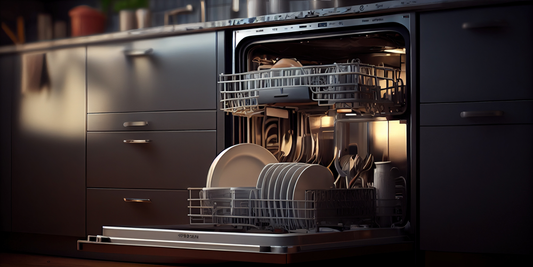
An undercounter fridge is a compact unit designed to sit beneath a standard 900mm worktop. Most are 820–870mm tall, 600mm wide, and hold between 130 and 200 litres. They slot underneath prep stations, bars, or service counters - anywhere you want chilled ingredients within arm's reach without giving up floor space.
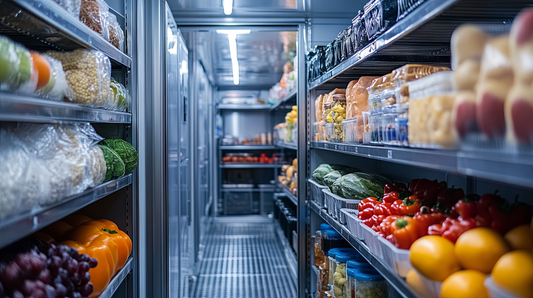
An upright fridge (sometimes called a reach-in) stands on its own, usually 1,800–2,100mm tall. Single-door models typically hold 550–700 litres; double-door versions go up to 1,200 litres or more. These are your main cold storage workhorses - the ones that hold the bulk of your chilled stock.
The key difference isn't just size. It's function. Undercounter fridges are about convenience and workflow. Upright fridges are about volume and organisation.
Undercounter Fridges: When They Make Sense
Undercounter models work best when space is tight or when you need chilled ingredients right where the work happens.
Behind bars. This is their natural habitat. Bottles, mixers, garnishes - all within reach, without a bartender ever turning their back on customers. A couple of undercounter units behind a busy bar can hold everything needed for a full shift.
Prep stations. A chef who can reach down and grab what they need without walking across the kitchen is a faster chef. In high-volume kitchens, undercounter fridges at each station (starters, mains, desserts) keep service tight.
Small kitchens and cafes. If your kitchen is under 15 square metres, an upright fridge might physically dominate the room. Undercounter units let you use the space above for prep, storage, or equipment.
Front of house. Sandwich shops, delis, and takeaway counters often need chilled stock close to the customer-facing area. Undercounter units sit neatly out of sight beneath the serving counter.
The trade-off is straightforward: you get convenience and space savings, but limited capacity. A 130-litre undercounter fridge holds roughly what you'd fit in two or three busy prep containers. That's fine for a shift's worth of mise en place, but it won't hold your full stock delivery.
If you're looking at undercounter options, our range of undercounter fridges includes models from 130 litres upwards - compact enough for tight spaces, built in stainless steel for commercial use.
Upright Fridges: When You Need the Volume
If undercounter fridges are about convenience, uprights are about capacity. A single upright fridge holds four to five times what an undercounter unit can - and organising stock across multiple shelves makes stock rotation far easier.
Restaurants doing 80+ covers. Once your cover count pushes past a certain point, undercounter fridges alone can't hold enough. You'll need at least one upright for bulk storage, with undercounter units at stations for service access.
Hotels and multi-service venues. Breakfast, lunch, dinner, room service, events - the storage demands stack up quickly. A double-door upright fridge holding 1,000+ litres is standard in hotel kitchens for good reason.
Catering businesses. If you're prepping for off-site events, you need the space to batch-prep and hold large volumes. Uprights with adjustable Gastronorm shelving let you slide full GN pans straight in.
Any kitchen receiving large deliveries. If your supplier drops off twice a week rather than daily, you need somewhere to put everything. An upright fridge gives you that headroom.
The downsides? Floor space and door swing. A single-door upright takes roughly 700mm x 800mm of floor area, plus clearance for the door to open fully. In a narrow kitchen corridor, that can create a bottleneck. Some operators fit uprights in back-of-house corridors or store rooms to free up the main kitchen footprint.
For a deeper look at features like digital temperature controls, R600a refrigerant, and adjustable shelving, our guide to modern commercial upright fridges covers what to look for.
Capacity Comparison
Here's how the numbers stack up side by side:
Undercounter fridges:
-
Single door: 130–200 litres
-
Double door/drawer: 200–300 litres
-
Best for: shift-level prep storage, bar stock, station access
-
Floor footprint: roughly 600mm x 600mm
Upright fridges:
-
Single door: 550–700 litres
-
Double door: 900–1,200+ litres
-
Best for: bulk storage, full stock holding, delivery intake
-
Floor footprint: roughly 700mm x 800mm (single), 1,400mm x 800mm (double)
A single-door upright holds roughly the same as four undercounter units - in a smaller overall footprint. If pure storage volume per square metre matters most, uprights win easily.
But capacity isn't everything. Four undercounter fridges spread across your kitchen mean ingredients are always within reach of whoever needs them. One upright in the corner means everyone walks to the same spot.
Energy and Running Costs
Undercounter fridges use less electricity in absolute terms - smaller compressor, smaller space to cool. A typical 130-litre undercounter unit draws around 100–150 kWh per year. A 600-litre upright uses 350–500 kWh per year.
But per litre of storage, the maths shifts. That upright is cooling four times the volume for roughly three times the energy. In terms of efficiency per unit of storage, uprights are usually better value.
What matters more than either number is how hard the compressor has to work. A fridge that's constantly opened during service (common with undercounter units) cycles more frequently than one that's accessed a few times per hour. Where you place the fridge matters too - next to a grill or fryer, and any fridge works harder to maintain temperature.
Modern commercial fridges using R600a or R290 refrigerant are significantly more efficient than older R134a models. If you're replacing equipment that's more than eight years old, expect a noticeable drop in your electricity bill regardless of which type you choose.
Installation and Practical Considerations
Ventilation. Both types need airflow around the condenser. Undercounter units with rear-mounted condensers need 50–100mm clearance behind them. Uprights need similar clearance plus space above if the condenser sits on top. Blocked ventilation is one of the top reasons commercial fridges fail prematurely.
Drainage. Some models produce condensation that needs a drain point or a drip tray. Check before you install - especially undercounter units going beneath a worktop where access is limited.
Levelling. Uprights should sit level (or slightly tilted back) so doors close properly under their own weight. Undercounter units on uneven floors can develop seal issues. Most commercial models come with adjustable feet or castors.
Gastronorm compatibility. If you work with GN pans (and most commercial kitchens do), check that the internal dimensions accept standard GN1/1 or GN2/1 trays. Most quality uprights are designed around Gastronorm sizing. Undercounter models vary - some accept GN trays, others don't.
When to Use Both
Here's what we see most often in well-run kitchens: a combination of both types, each doing what it does best.
The typical setup in a restaurant doing 100–150 covers looks something like this: one or two upright fridges in the main cold storage area (holding bulk stock, deliveries, and backup ingredients), plus two or three undercounter units at prep and service stations (holding that shift's mise en place and frequently grabbed items).
This split means the chef de partie isn't walking to the back of the kitchen every time they need cream or herbs. And the bulk stock isn't crammed into a tiny unit that's opened every thirty seconds during service.
For larger operations - hotels, event caterers, multi-outlet businesses - the same principle scales up. Walk-in cold rooms replace the uprights, and undercounter units at each station remain essential. If you're planning your full refrigeration setup, our complete guide to commercial refrigeration walks through the whole cold chain from storage to service.
Quick Decision Guide
Choose undercounter if:
-
Your kitchen is under 15m² and floor space is critical
-
You need chilled access at the point of service (bars, counters, prep stations)
-
Your storage demands are moderate (under 50 covers, or used alongside bulk storage elsewhere)
-
You want to keep the workspace above for prep
Choose upright if:
-
You need to store large volumes of chilled stock (80+ covers, hotel, catering)
-
You receive large deliveries that need immediate cold storage
-
You want organised, shelved storage with easy stock rotation
-
Floor space is available in a back-of-house area
Use both if:
-
You run 80+ covers and need both bulk storage and station-level access
-
Your kitchen layout separates prep areas from main storage
-
Speed of service matters and you can't afford staff walking back and forth
Frequently Asked Questions
How long do commercial fridges typically last?
A well-maintained commercial fridge - undercounter or upright - should last 8–12 years. The compressor is usually the first component to go. Regular condenser cleaning, proper ventilation, and not overloading the unit all help extend its lifespan.
Can I use an undercounter fridge as my only refrigeration?
For very small operations (a kiosk, coffee cart, or low-volume sandwich shop), yes. But for any kitchen doing regular meal service, you'll almost certainly need more capacity than a single undercounter unit provides. Most kitchens use undercounter models to supplement, not replace, their main refrigeration.
What temperature should a commercial fridge run at?
UK food safety regulations require chilled food to be stored at 8°C or below. Most operators set their fridges between 1°C and 5°C to provide a safety margin. Digital thermostats on modern units make this easy to monitor and adjust.
Do undercounter fridges fit under standard worktops?
Most commercial undercounter fridges are designed to fit beneath a 900mm worktop. Check the exact height of the unit (including any feet or castors) against your worktop clearance before ordering. Some units are 820mm tall, others are 870mm - that 50mm difference matters in a tight fit.
Prices, specifications, and availability are subject to change. Always verify that equipment dimensions and features meet your kitchen's specific requirements before purchasing.