I've been stood in enough cellars at 8.45pm with the kick-off ten minutes away to know exactly what a pub feels like when the kit can't keep up. The glasswasher's groaning. The bottle cooler's hot to the touch. There's a queue four-deep at the bar and the till's frozen because somebody just scored. That's the sound of a Saturday night you've already lost. (I'm Andrew Pickersgill, MD at eCatering - and this is the playbook I'd hand any operator sat with a four-week window before the opening match.)
The 2026 World Cup is going to be the biggest summer of trade UK pubs have seen in a generation. Eleventh of June through nineteenth of July. Hosted across the USA, Canada and Mexico - which means every kick-off lands in a UK evening slot. Hot summer trade. Beer gardens running. Late licences. England in Group L. If your kit is right, this is your year. If it isn't, you'll watch the trade walk into the pub down the road.
This is the pillar. Five supporting pieces will dig deeper into half-time turnaround, match-day menus, beer-garden cooling, glass-turn maths and the licensing piece. But everything starts here.
No fluff. Real kit. Real prices.
────────────────────────────────────────
Why the 2026 World Cup is the biggest trade event of the year
Look at what Euro 2024 did to UK trade and you stop arguing about the spend. Across the 33-day tournament, pubs took £2.4 billion in beer sales. 604.5 million pints poured. England v Serbia was up 43% on the same day a year earlier. England v Denmark, +53%. The semi-final against the Netherlands moved 12.5 million pints in a single evening - up 66% on the same day in 2023, up 88% on the average Wednesday.
That's not a spike. That's a cliff edge.
Group-stage England fixtures alone drove a +31.5% lift in draught sales - roughly £925 of extra revenue per pub per match day. England v Switzerland (the quarter-final) saw the average UK pub pour 491 extra pints of draught, generating £639 in additional revenue per pub in a single night. Lager sales lifted +150% across the tournament. Cider had its biggest uplift on England game days. Morning Advertiser data put kick-off sales spikes at +550% in the build-up window, +960% at kick-off itself, and over +1,000% in some late-evening fixtures.
Multiply that by 104 matches, three England group games minimum, knockout rounds, a final, and the longest run of warm-weather trade in the calendar. The World Cup isn't a marketing moment. It's the biggest pub trade event of the year. Full stop.
The job between now and 11 June is to make sure your kit can take it.
What every UK pub needs to plan for
Three things to lock in before you spend a penny on equipment: the dates, the kick-off times, and the licence.
The 2026 World Cup runs 11 June – 19 July. 48 teams. 104 matches. The final is Sunday 19 July at MetLife Stadium in New Jersey. Because the tournament is in North America, every kick-off falls in a UK evening window - typically 5pm, 6pm, 9pm or 10pm BST. That's a gift. It means lunchtime trade keeps running normally and the sport rush layers on top of your existing shift.
England's Group L fixtures (UK time):
-
Wed 17 June - England v Croatia, 9pm BST (Dallas)
-
Tue 23 June - England v Ghana, 9pm BST (Boston)
-
Sat 27 June - England v Panama, 10pm BST (NY/NJ)
Two of those are mid-week. Late kick-offs. Mark them in the diary now.
On licensing, the UK government has confirmed extended hours for England and Wales: pubs can serve until 1am for fixtures kicking off between 5pm and 9pm, and until 2am for fixtures kicking off between 9pm and 10pm. Wider extensions have been signalled for England knockout matches. Scotland's licensing is devolved, so check with your local authority - but extensions are running there too.
And then there's the weather. June and July across the UK overlap with the longest beer-garden window of the year. Most operators will lean on outdoor for 30–60% of match-day covers. Plan it in. Don't bolt it on the morning of.
You've got a four-week window from now until the opening match to spec, deliver, install, commission and burn-in any new kit. Order anything substantial in May, not June. Lead times tighten under pressure.
The eCatering World Cup bundles, explained
We've built eight World Cup bundles to match how UK pubs actually trade. Each one starts from a real operator profile, not a brochure. Browse them all on the World Cup 2026 landing page, or shop the lot via the World Cup collection.
The Café Kick-Off - sub-£2k. For the café, deli or coffee shop running its first sport season. A small bottle cooler, a counter fryer (Quattro tier), maybe a bain marie. Enough to add toasties, wraps and bottled lager to a daytime venue. Light, simple, built for the operator who's pivoting once. See it on /pages/world-cup-2026.
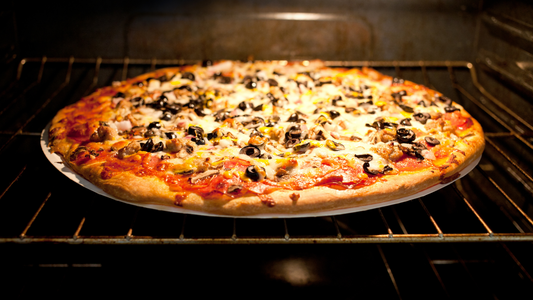
Pizza Pro Lineup - £3–5k. Pizzeria or Italian-leaning pub pulling in match-day pizza orders. Twin-deck pizza oven with independent decks (thin base on top, deep pan below), prep counter, dough trays, drinks fridge. Browse the underlying range in commercial pizza ovens.
Burger & Beer Build - £2.5–4k. Wet-led pub adding a hot-food match-day menu. The Quattro FSN003 24L gas fryer (about which more below), an Archway 3-burner LPG chargrill at around £900, and a Contender 220L bottle cooler. Tight, focused, pays back inside one tournament.
Full Venue Kit - £6–9k. Mid-size pub that's repositioning for the tournament - adding capacity in the cellar, upgrading the wash-up, replacing the bottle cooler. Contender PRO500 dishwasher, Contender 320L triple-door bottle cooler, 27kg ice machine, fryer, prep counter. The workhorse spec.
Match-Day Master - £8–12k. The high-volume venue serving 100+ at peak. Twin Quattro fryers, 47kg ice machine, twin-door bar fridges, hot holding, glasswasher and dishwasher pair. Sized for the pub doing 600 covers on an England knockout night.
Rapid Response Set - £500–1,500. The one nobody plans for and everybody needs. Single-item replacement when something fails mid-tournament - a bottle cooler, a glasswasher, an ice machine. Next-day dispatch. If your fridge dies on the morning of England v Croatia, this is the call.
High-Volume Hub - £4–7k add-on. Sports bar, hotel bar, big-screen venue that already has a base spec but needs more capacity. A second 47kg ice machine on top of the existing 27kg, additional bottle coolers, secondary glasswasher. Bolt-on, not a rebuild.
Bar & Beverage Box - £3–6k. Wet-only - beer garden, sports bar, drinks-led venue. Contender 320L triple bottle cooler, Contender PRO 400mm glasswasher and PRO500 paired up, ice machine, glass shelving. No food kit. Pure pour-and-wash.
Pick the bundle that matches the venue and the volume. Or skip the bundles and shop the Contender range (the mid-range workhorse), the Quattro range (entry-level / budget), or our KINN eco-friendly cleaning and hygiene line for the front and back of house. Spec it your way.
The 5-step setup: Plan, Cool, Turnaround, Food, Crew
This is the sequence we walk every operator through. Get these five right in this order and the rest of the spec falls out of it.
01 Plan Your Space
Start with a capacity audit. How many covers indoors? How many in the beer garden under cover? How many standing? Where's the fixed bar - and could a temporary outdoor bar take 30% of the pour off it? Will every cover see a screen, or are there blind spots that go quiet at the equaliser?
Then map the service flow. Where do drinks leave the bar? Where does food run from the kitchen? Where do glasses come back, and who's clearing them? On a 600-cover night, the wrong floor plan is the difference between 2,100 pints and 1,400.
Walk the space with a tape measure and the Saturday team. Not from the office.
02 Sort Your Cooling Out
Cooling is the spec that fails first and fails worst.
Bottle cooler maths. A Contender 220L sliding double door bottle cooler holds about 150 bottles loaded properly - fan-assisted, +2°C to +9°C, four adjustable shelves. The Contender 320L triple-door bottle cooler takes you to roughly 225 bottles, lockable, fan-cooled, designed for the bar back-up role.
A 600-cover England night burns through ~525 bottled drinks. One 320L plus a 220L back-up is the realistic minimum. Keep cellar stock chilled and re-load every 90 minutes.
Ice. A 600-cover sport night needs about 200kg of ice across the night, with ~80kg of that landing in a 90-minute window between 8.30pm and 10pm. A Contender 27kg/24h machine is fine for a normal Wednesday and completely outclassed on a match night. The 47kg/24h plus an existing storage bin is the workhorse for high-volume bars.
Recovery time matters more than the headline capacity. A cooler that sells you "320L" but takes four hours to recover from a re-stock isn't a 320L cooler on a Saturday. Browse the full drinks fridges and bottle coolers range and the ice machines collection - and check the recovery times before the headline volumes.
03 Think About Turnaround
Turnaround is the maths that loses pubs the night.
Glass turn. 2,100 pints plus ~800 mixed drinks across the evening = ~2,900 glasses. Even at 60% glass return rate (people park them outside, on tables, on windowsills), you're putting 1,750 glasses through the wash. A Contender PRO 400mm glasswasher runs roughly 120-second cycles, c.30 glasses per basket - about 900 glasses an hour theoretical. Two glasswashers, or a glasswasher paired with the Contender PRO500 dishwasher (washes up to 500 plates an hour), is the safe formation.
Half-time. Fifteen minutes. Eighty per cent of the food orders for the night land in that window. Stage your glassware on the bar - racks of clean pints lined up. Pre-pour. Pre-portion food (chips, garnishes, sauces). Two tills running, one card, one cash.
The whole dishwashers and glasswashers range is built for the volume - but the spec only works if the floor staff are trained on the rhythm.
04 Don't Forget The Food
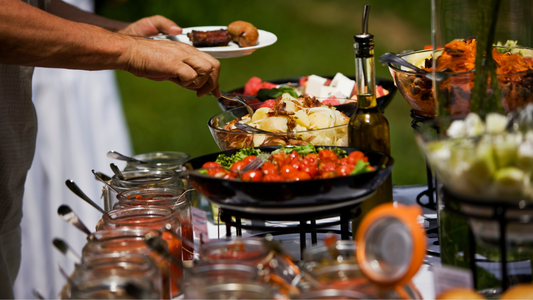
Match-day kitchens fall down on the half-time burgers.
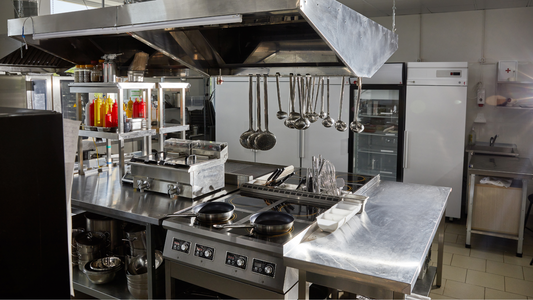
150 hot food orders concentrated in a 30-minute window between 8.30pm and kick-off. A second spike at half-time. Most pubs run one fryer. On normal Saturday trade, that's enough.
It is not enough on England v Germany at 9pm.
The Quattro FSN003 24L gas fryer at £574.99 ex VAT is our go-to entry on this. 25.5kW, 87,000 BTU, twin basket, 60-second recovery on a full basket drop. It moves about eight portions a minute once it's hot. One does the job up to about 300 covers. Twin them past 300. The full commercial fryers range stacks them up.
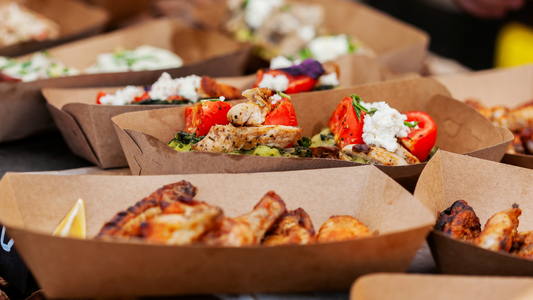
Pre-portion everything. Match-day menus are 5–7 items max. Burgers, loaded fries, pizza slices, sharing platters, hot wings - all fryer, grill or oven, no à la carte.
05 Plan Your Crew
The bit operators forget. Kit doesn't run itself.
One kitchen porter cannot clear 2,900 glasses solo. Plan a second. Floor staff need briefing on goal-celebration interruptions - the till backs up at the moment of the equaliser, and that's where you lose the next round of drinks. Two tills at peak. One on cards, one on cash.
Train it the week before. Drill the half-time turnaround once before kick-off. Write the formation on the back of the bar. It's boring, reliable repetition - which is exactly what you want on a Saturday night.
Get those four right - space, cooling, turnaround, food - and the crew piece slots in around them.
Capacity maths: how big is your peak?
Imagine a 90-cover-capacity pub in Manchester's Northern Quarter. Tuesday: 50 covers. Saturday: 200. England v Croatia, Wednesday 17 June, 9pm BST. The booking sheet hits 480 names by Monday. By kick-off, you've got 600+ through the door - between bookings, walk-ins and standing trade. Here's what happens to the kit between 6pm and 1am.
6pm - warm-up. Doors open. First 80 in. Pints flowing at a normal mid-week rate. Cellar reading fine, ice machine ticking. This is the easy hour.
8pm - pre-match build. Numbers ramp from 200 to 400 inside 45 minutes. Bar staff doubled. Bottle cooler door opening every 30 seconds. The first re-stock from the cellar lands.
8.30pm - food rush. 150 hot food orders concentrated into 30 minutes. The fryer recovery is the bottleneck. With twin Quattro 24L fryers running, the kitchen holds the line. With one, the queue stretches past kick-off.
9pm - kick-off. Sales spike to +960% on a normal Wednesday. Pours running 12–15 pints per minute across two bar stations plus the beer-garden bar. First 30 minutes of the match accounts for ~50% of the night's pour.
9.45pm - half-time crunch. Fifteen minutes. 80% of the food orders. Glassware staged on the bar. Pre-poured pints lined up. Two tills hammering. The KP team turning baskets every 90 seconds.
10.30pm - second-half pour. Second-half goals tend to drive the second wave. Bottle cooler temperature is creeping if it's under-spec. Ice machine refilling on a 90-minute cycle.
11pm - full time. Extended licence kicks in. Tournament atmosphere holds. Last orders pushed to 1am.
1am - bar close. Floor team starts the wind-down. KPs still clearing. The night did 5x normal Wednesday turnover.
The numbers across the night, in order: 2,100 pints poured, 525 bottled drinks served, 200kg of ice consumed (80kg in the peak 90-minute window), 2,900 glasses cycled, 150 hot food orders.
On a normal Saturday, one fryer is enough. On England v Germany at 9pm, one fryer is what loses you the night.
Run those numbers against your own capacity. If your peak is half this, halve the spec. If you're a 1,000-cover sports bar, double it. The maths scales - the principles don't change.
Half-time turnaround: 15 minutes, 80% of the orders
The supporting article on this drops next week and goes deep. Here's the principle.
Three rules.
Pre-pour. Start filling pints from five minutes before half-time. Lager and cider, lined up in racks of 24, ready to hand out. Stout takes longer - pour it earlier. Don't wait for the whistle.
Pre-portion. Chips weighed and bagged. Sauces in pots. Garnishes prepped. Half-time food is fryer-drop, plate, hand over. Anything that needs assembly past the basket lift kills your throughput.
Two tills, two queues. One card, one cash. Lined up in parallel. Floor staff redirecting customers between them. Single-queue at the bar will collapse inside three minutes.
Stage the glassware. Rack of clean pints visible from every till position. The bottleneck is never the pour - it's the empty glass shelf at 9.46pm.
Read more on the wash-up side of this in the best commercial dishwashers for fast-paced kitchens.
Match-day menus: what actually sells
The supporting article goes wide on this one. The short version.
Five to seven items on the match-day menu. No more. All pre-portioned. All fryer, grill or oven. No à la carte. If a chef is plating it, it's not a match-day item.
What sells:
-
Burgers (always - beef and a vegan option, ~25% of orders take the veggie/vegan option now)
-
Loaded fries (cheese, chilli, BBQ, pulled pork)
-
Pizza slices (if the pizza kit is in)
-
Hot wings (Contender FCE091 16L pressure chicken fryer, £502.99 ex VAT, runs the chicken side fast)
-
Sharing platters (mixed fried, sliders, dips)
-
Pretzels and bar snacks for the second-half lull
On the drinks side, lager and cider lead by a country mile. Lower-margin per pint than craft, but the volume more than makes up for it. World lager sales lifted 150% over Euro 2024 - the spike is concentrated in the mainstream brands.
Vegan/veggie option is mandatory now. Don't make it an afterthought.
Stay below a five-minute ticket time. If a dish takes longer than that to leave the pass on a normal Tuesday, it doesn't go on the World Cup menu. Period.
Common mistakes pubs make on big match days
Seven of them. Not three.
-
Running out of ice by 9.30pm. The most-reported sport-night failure. Always under-spec'd. The fix: a 47kg machine plus an existing storage bin. Or buy in bagged ice as a back-up - but plan it.
-
Bottle coolers that can't recover. Stock loaded warm at 17°C lands in the customer's hand at 12°C. Half-time complaints follow within minutes. The fix: a 320L triple plus a 220L back-up, both fan-cooled, properly sized to the throughput.
-
Glasswasher fails on Friday night. Kitchen falls back to paper cups. Atmosphere collapses. The fix: a paired wash-up - glasswasher plus dishwasher - or the Rapid Response Set on next-day dispatch.
-
Fryer cold-drops on the half-time rush. Burgers come out greasy at 160°C oil instead of 180°C. The customer notices. The fix: twin fryers past 300 covers. Don't try to push one.
-
No outdoor extraction in the beer garden. "We can't legally cook outside" - and the menu collapses to crisps. The fix: get the extraction signed off in May, not June. Beer-garden hot food is a whole category of trade most pubs leave on the table.
-
Kitchen porter capacity. One KP can't clear 2,900 glasses solo. Two minimum on an England knockout. Brief them on stacking, not just clearing.
-
Cash and order handling during goal celebrations. The till backs up at the moment of the equaliser, and you've lost the next round of drinks. Two tills, two queues, floor staff redirecting. Drilled before kick-off.
There's a lot more on managing volume in our guide to the best catering equipment for large-scale events and festivals - and the streamlining piece in how to streamline service during bank holidays covers the same ground for any peak-trade window. The summer-fairs piece - the best catering equipment for summer fairs and festivals - translates straight across to beer-garden setups.
When to bring in a Key Account Manager
Andy Whitehead is our Commercial Director. He doesn't sell you kit. He asks what you're pouring, where you're trading, how many TVs you've got, and builds the formation backwards from there. Andy's team has speced up sport-night kits for pubs in Manchester's Northern Quarter, beer gardens in Brighton's North Laines, sports bars in Glasgow, hotel bars in Edinburgh, and gastropubs across the Cotswolds in the past tournament cycle alone.
Call him in if any of these apply:
-
You're spending over £5,000 on the World Cup spec
-
A new bar refit or beer-garden build-out is in scope
-
You're rolling kit out across a multi-site pub group
-
Bespoke stainless or extraction work is needed
-
A three-phase electrical install is required
What he does, in order: site survey, capacity audit, bundle sizing, finance package, delivery and install coordination. One contact, one timeline, one accountable person.
"Most operators I speak to in the four weeks before kick-off are panicking about the food. The actual problem is always cooling and glass turn. If your bottle cooler can't recover and your glasswasher gives up at 10pm, you've lost the second half. We size the cooling and the wash-up first - everything else is shopping."
- Andy Whitehead, Commercial Director, eCatering
You can meet the team here.
Frequently Asked Questions
How much extra trade can a UK pub expect during the 2026 World Cup?
Up to five times normal weekend turnover on England knockout nights. During Euro 2024, the average UK pub poured an extra 491 pints of draught on big England fixtures, generating £639+ in extra revenue per match.
Across the full 33-day tournament, UK pubs collectively took £2.4 billion in beer sales - 604.5 million pints. Group-stage England matches drove a +31.5% lift in draught sales, worth roughly £925 in extra revenue per pub, per match.
The 2026 tournament is six weeks long with three England group games minimum. Plan for the upside, not the average.
What equipment fails most under World Cup load?
Four pieces, in order of frequency: ice machines, bottle coolers, glasswashers, and fryers.
Ice machines run out by 9.30pm if under-spec'd. Bottle coolers fail to recover to under 5°C and serve warm beer. Glasswashers break down or back up under volume - at 1,750 glasses through the wash on a 600-cover night, the cycle has to keep up. Fryers cold-drop during the half-time food rush, oil temperature falling from 180°C to 160°C, and food comes out greasy.
Spec for the spike, not the average.
Do I need extra fridge capacity for the World Cup?
Almost always yes. A 600-cover sport night burns through about 525 bottled drinks. A single Contender 220L bottle cooler holds c.150 bottles loaded properly.
The realistic minimum for a 600-cover venue is one 320L triple plus a 220L back-up, plus chilled cellar stock for re-loads. For lower-volume venues, a single 320L will cover most match nights. Browse the full range in drinks fridges and bottle coolers.
How do I plan for a half-time rush in a pub?
Three rules. Pre-pour pints from five minutes before half-time. Pre-portion food so the fryer just drops baskets. Run two tills at peak - one for cards, one for cash - and stage glassware on the bar.
Brief the floor team on the rhythm. Drill it once before kick-off. Half-time is fifteen minutes and accounts for 80% of the food orders for the night - there's no recovery if you go in unprepared.
What's the best outdoor bar setup for a World Cup beer garden?
At minimum: a 320L bottle cooler positioned in shade, an ice well or insulated tub topped up every 30 minutes, polycarbonate glassware (no broken pints in the garden), a card-only payment terminal, and outdoor heater or shade rotation depending on weather.
Licence-check the garden under your existing premises licence, or take out a Temporary Event Notice (TEN) if your premises licence doesn't cover the outdoor area. Don't assume - confirm in writing with your local authority before opening day.
Can I lease equipment for the tournament window only?
Yes. eCatering offers several routes: iwocaPay (£150–£30k, interest-free over three months), leasing over three to five years to keep cost off your balance sheet, and PayPal Credit (four months interest-free on orders over £99). The Rapid Response Set bundle covers single-item replacement on next-day dispatch if kit fails mid-tournament.
Full options on the finance page.
Now - go and win the Saturday
To recap.
Match the kit to the volume - pick the bundle that fits the venue, not the one that fits the brochure. Plan the cooling first; everything else is shopping. Get the crew right and drill the half-time turnaround once before kick-off. Mind the seven mistakes - especially the ice and the bottle-cooler recovery. The four-week prep window is open now, not in June.
The World Cup runs eleven weeks. Three England games minimum. Extended licences, late kick-offs, the longest beer-garden window of the year. The opportunity is bigger than any operator's done in a decade - and the kit either holds, or it doesn't.
Three things to do this week:
-
Browse the full bundle range on the World Cup 2026 landing page
-
Shop the kit directly via the World Cup collection
-
Speak to Andy and the team before you commit anything over £5k
-
Spread the cost via our finance options - three to sixty months, off the balance sheet
Get those four right, and everything else slots in around them.
Now - go and win the Saturday.
- Andrew